


































































































ECNEC Approves Tk 394.84 Crore Cost Increase for Establishing Four Engineering Colleges




The Executive Committee of the National Economic Council (ECNEC) has approved 12 development projects involving a total expenditure of Tk 7,150.21 crore. The initiatives include skill enhancement of technology‐literate youth through Artificial Intelligence (AI), strengthening coastal resilience through technology‐based forest management, enhancing the technical and operational capacity of the Rapid Action Battalion (RAB) (2nd revised), and establishing one engineering college each in Chattogram, Khulna, Rajshahi, and Rangpur (2nd revised).
The entirety of the approved project expenses will be financed from the government’s own funds.
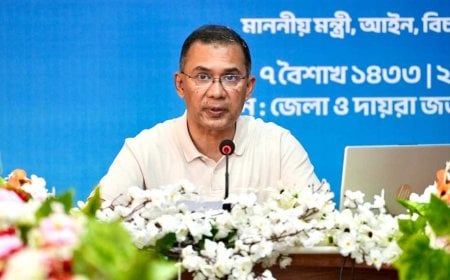
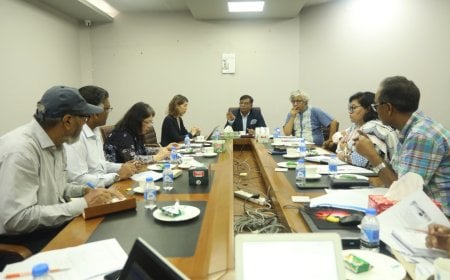
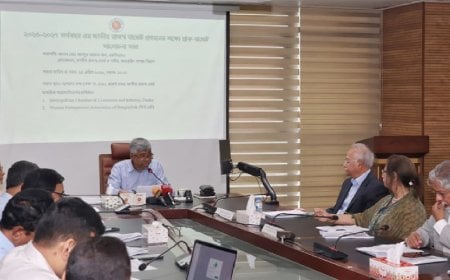
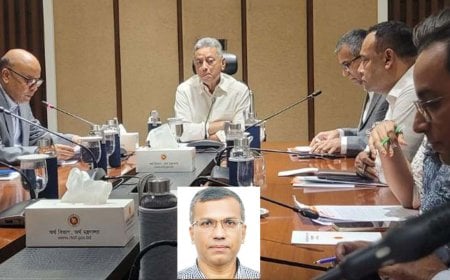
The decisions were announced on Monday, 10 November, following an ECNEC meeting held at the NEC Conference Room in Sher-e-Bangla Nagar, Dhaka. The meeting was chaired by the Chief Adviser and ECNEC Chairperson, Dr. Muhammad Yunus.
According to the Planning Commission, among the 12 projects, eight are new, two are revised, and two involve time extensions without any increase in cost.
The meeting was attended by Planning Adviser Wahiduddin Mahmud, Finance Adviser Dr. Salehuddin Ahmed, Law, Justice and Parliamentary Affairs Adviser Dr. Asif Nazrul, Home and Agriculture Adviser Lieutenant General (Retd.) Md. Jahangir Alam Chowdhury, Industries and Housing and Public Works Adviser Adilur Rahman Khan, Power, Energy and Mineral Resources Adviser Muhammad Faozul Kabir Khan, Environment, Forest and Climate Change Adviser Syeda Rizwana Hasan, Local Government Adviser Nurjahan Begum, along with relevant officials.
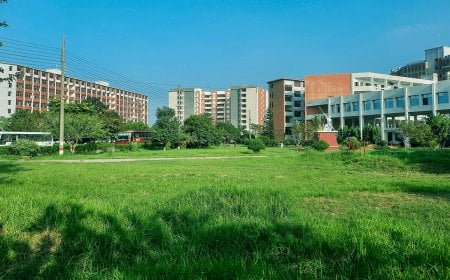
Among the approved projects, the cost for establishing engineering colleges in the four divisional districts has increased by Tk 394.84 crore. Under the second revision for the Directorate of Technical Education, the expenditure now stands at Tk 1,621.23 crore.
Details of Approved Projects
The 12 approved projects include the following:
-
Rural Development and Cooperatives Ministry (2 projects)
-
“Manikganj District Important Rural Infrastructure Development”
-
“Satkhira District Rural Infrastructure Development”
-
-
Agriculture Ministry (1 project)
-
“Improvement of Small Irrigation Management in Haor Areas of Kishoreganj and Netrokona Districts (3rd Revised)”
-
-
Education Ministry (2 projects)
-
“Infrastructure Development of Gazipur Agricultural University”
-
“Establishing One Engineering College Each in Chattogram, Khulna, Rajshahi and Rangpur Divisions (2nd Revised)”
-
-
Ministry of Liberation War Affairs (1 project)
-
“Construction of Independence Monument at Suhrawardy Udyan (3rd Phase) (1st Revised)”
-
-
Ministry of Health and Family Welfare (3 projects)
-
“Implementation of Essential Remaining Activities of Completed 4th Sector Program on Family Planning, Mother, Child and Reproductive Health Services”
-
“Integrated Improvement in Operational Management of the Directorate of Health Education, NIPORT and the Directorate of Nursing and Midwifery”
-
“Implementation of Essential Remaining Activities of PFD, HEF, IFM, HRD and SWPMM”
-
-
Ministry of Defence (1 project)
-
“Construction of ‘B’ Type Officers’ Quarters in Nirjhor Residential Area, Dhaka Cantonment”
-
-
Road Transport and Bridges Ministry (1 project)
-
“Fourth Time Extension of Construction of Kalia Bridge over Nabaganga River at the 21st Kilometer of Narail-Kalia District Highway (2nd Revised)”
-
-
Industries Ministry (1 project)
-
“BSCIC Industrial Park, Tangail (3rd Revised)”
-
The ECNEC meeting also took note of nine additional projects approved earlier by the Planning Adviser. These include feasibility studies for upgrading multi-tier educational institutions and strengthening the Education Engineering Department, development of selected non-government secondary schools (1st Revised), preservation and development of burial sites of martyred and other freedom fighters (1st Phase) (1st Revised), establishment and strengthening of an agricultural research center under Bangladesh Agricultural Research Institute in Meherpur Sadar (1st Revised), and the “Dhaka Surrounding Areas Development Project (DCNUP) (2nd Revised).”