




































Clash at Shahbagh: Police and Engineering Students Collide During ‘Long March to Dhaka’
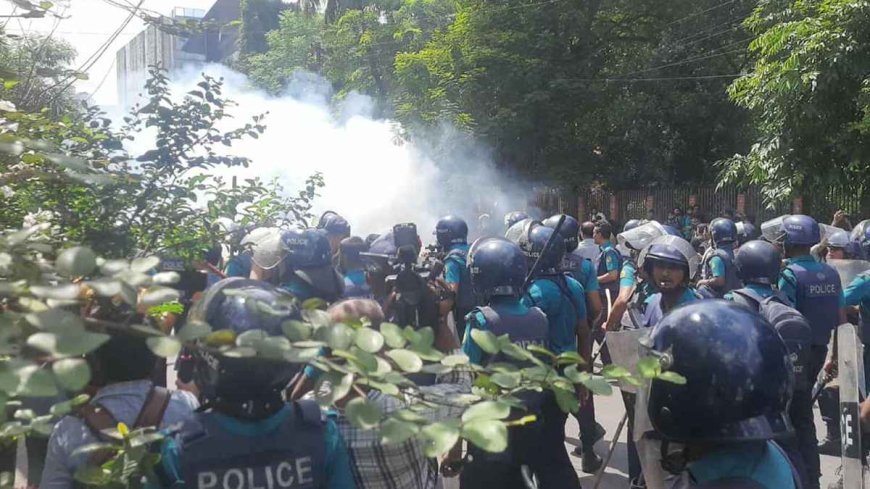



A clash broke out between police and engineering students participating in the ‘Long March to Dhaka’ program at Shahbagh in the capital. The incident occurred around 1:45 pm on Wednesday, August 27, in front of Hotel InterContinental. Police fired tear shells and sound grenades to disperse the students as they attempted to break through a barricade and march towards the Chief Adviser’s residence, ‘Jamuna.’ The situation triggered heightened tension in the surrounding area.
Eyewitnesses reported that several students were injured. Facing resistance from police, the students retreated but regrouped at Shahbagh, where they resumed their protest procession. Two of the injured students were taken to BIRDEM for treatment, while others were rushed to different hospitals by their peers. Their identities could not be confirmed immediately.
Although the students were forced to step back, they attempted to reposition themselves soon after. Earlier in the morning, diploma and BSc engineering students from different parts of the country occupied Shahbagh intersection. As the day progressed, they launched the ‘Long March’ towards Jamuna, sparking a chase and counter-chase with law enforcers.
At 1:00 pm, the movement’s General Secretary, Sakibul Hasan Lipu, held a press conference at Shahbagh intersection. He announced a plan to lay siege to the Secretariat to press for three demands: the issuance of a gazette notification by executive order, the arrest of those who threatened to kill engineer Rokonujaaman, and the fair recognition of merit. Later, however, the decision was altered, and students attempted to move towards Jamuna instead.
Meanwhile, vehicular movement in surrounding roads was halted due to the agitation, creating severe traffic congestion across four major routes. Commuters and pedestrians faced immense suffering, with protesters only allowing ambulances to pass through.
At around 12:30 pm, on-the-ground observation revealed that no vehicles were running from Matsya Bhaban in the east, Katabon in the west, TSC in the south, and Farmgate in the north due to the blockade. Public transport diverted to alternative routes, forcing many passengers to walk or take rickshaws to reach their destinations. The worst affected were patients visiting Bangabandhu Sheikh Mujib Medical University, as vehicles dropped them far from Shahbagh, compelling them to walk long distances.
Afsana Begum, a patient who came by Shikor Paribahan from Gulistan, said: “Due to the movement, we were dropped off at Matsya Bhaban intersection and the bus took a detour through Hare Road. Rickshaws were unwilling to come here, so I had to walk a long way.”
Reports suggest the blockade at Shahbagh triggered gridlocks at Science Laboratory, Banglamotor, Kakrail, and several other connecting roads.
A day earlier, on August 26, BUET students had blockaded Shahbagh for nearly five hours in the afternoon. Later at night, they vacated the area while announcing the ‘Long March to Dhaka’ program.









