

























































































































































NTMC recorded 150,000 phone calls in just one year
Call Record Controversy: NTMC’s Role Under Scrutiny




During the tenure of the Awami League government, the sensitive call records of political figures or individuals deemed a threat to the administration were frequently leaked on social media and other platforms. However, how these leaks occurred has never been officially disclosed.
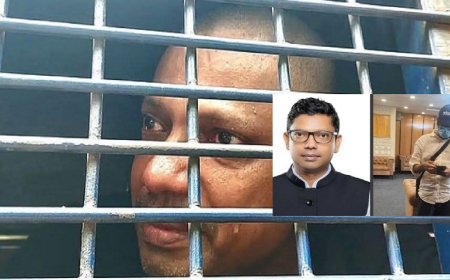
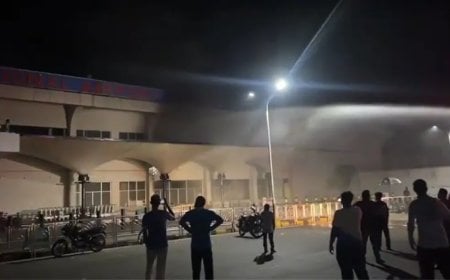
Despite the National Telecommunication Monitoring Center (NTMC) being entrusted with responsibilities of lawful interception and preservation of records in the interest of state security, its former Director General, Major General (dismissed) Ziaul Ahsan, is now at the center of allegations. Ahsan, who served as NTMC chief from 2022, has been accused of abusing his position by facilitating such leaks. Once seen as a guardian of national security, he is now facing trial and has been imprisoned. Past records suggest he allegedly leaked opposition leaders’ private calls, which were later broadcast on television. Most recently, summaries of conversations involving the Cabinet Secretary, the Inspector General of Police, senior officials, and several ministers during the student protests were reportedly recovered from Ganabhaban.
According to available information, NTMC recorded 150,000 phone calls in just one year ahead of the July uprising, a figure confirmed by a reliable source in the Ministry of Posts, Telecommunications, and Information Technology. The source added that the matter has already been officially communicated to the UN Human Rights Commission, which expressed “surprise” at the revelations.
It remains unclear how many of these records were leaked or misused. Sources indicated that the International Crimes Tribunal has already reviewed about 20 call recordings. NTMC possesses technology capable of recording over 150,000 calls, although there is always the possibility of leaks from either end of the conversations. However, Bangladesh’s history shows that such breaches have occurred even under state surveillance. While Section 97 of the Telecommunications Act of 2001 grants third-party interception powers, the telecom regulator BTRC reportedly never authorized such practices.
Policymakers linked to the Ministry of Posts, Telecommunications, and IT admitted that call recording under NTMC had been weaponized during the Awami League government to safeguard its grip on power. “Anyone who opposed the government or expressed dissent had their calls recorded. A team worked round-the-clock on this. If a survey were conducted, it might be seen as a world record. It is doubtful whether any other country has recorded opposition leaders’ calls in such a manner,” one policymaker stated.
Although NTMC formally functions under the Ministry of Home Affairs, insiders revealed it was effectively run by an intelligence agency. Efforts are now underway to bring NTMC fully under Home Ministry control to ensure it is used solely for state security, rather than as a political tool.
Section 97 of the Telecommunications Act (2001, amended in 2010) allows law enforcement agencies to intercept and record calls with the approval of the Home Minister or State Minister. The law specifies: “Notwithstanding anything contained in this or any other law, in the interest of state security or public order, the government may authorize officials of intelligence, national security, investigative or law enforcement agencies to intercept, record, or collect communications for a defined period, and telecom operators must comply.” The Act also clarifies that such intercepted information is admissible as evidence in court under the Evidence Act of 1872.
Bangladesh’s interception regime has roots in 2008 when the National Monitoring Center (NMC) was established at the DGFI headquarters with government backing and mobile operators’ funding. Following approval from the then-Prime Minister, NMC was restructured as the National Telecommunication Monitoring Center (NTMC) on January 31, 2013, and began operating independently under the Ministry of Home Affairs in February 2014.
Reports allege that during the Awami League government, NTMC misused its legal authority to purchase surveillance equipment worth $200–300 million. To investigate the matter, the interim government has recently formed a committee led by Fayez Ahmad Tayyab, Special Assistant to the Chief Adviser on ICT and Telecommunications. The committee will scrutinize how the equipment was procured, from where, at what cost, and how it was deployed.