





































Starlink Sparks Speedy Shift: Special Assistant Unpacks Internet Revolution in Bangladesh



On December 12, 2021, Bangladesh joined over 60 countries worldwide in piloting the fifth-generation mobile internet service—5G. Later, on June 30, 2024, the government directed that 5G be launched in four zones of the capital and at the airport by October 30 of the same year. However, four years since the initial trial, the general public in Bangladesh has yet to experience 5G.
Amidst the delays and rhetoric surrounding mobile internet advancements, the interim government has made history by launching satellite-based internet services—this time, not in theory but in practice. Within just 75 days of its pilot launch, Bangladesh has reached a new milestone by introducing Starlink as the country’s third source of uninterrupted and nationwide internet connectivity.
Completing a successful mission in only 90 days—from drafting licensing guidelines to welcoming a foreign company (Starlink) and initiating commercial operations—the Ministry of Posts, Telecommunications, and Information Technology, along with the regulatory body BTRC, has set an unprecedented example in Bangladesh’s telecom history.
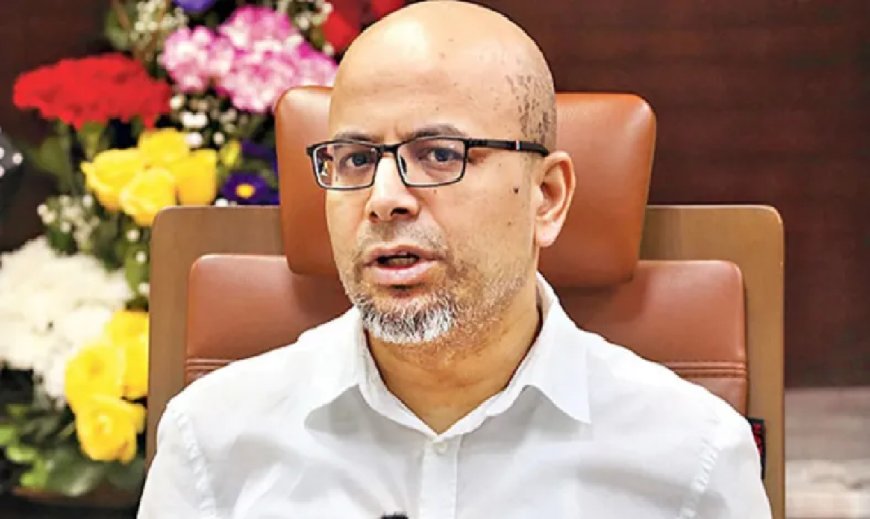
But what does this satellite-based internet mean for the average citizen? How affordable is it? And what impact will it have on the country’s existing internet industry? Engineer Faiz Ahmad Taiyeb, Special Assistant to the Chief Adviser and government representative of the Ministry, provides answers to these pressing questions in the following interview.
Question: Who is Starlink for? Who are its target users?
Answer:
Currently, fiber connectivity has not reached many areas in Bangladesh. Only about 30% of mobile towers are fiber-connected. Most mobile operators rely on microwave links, which are low in capacity. Thousands of towers still operate with just 300 Mbps bandwidth and that bandwidth is shared among thousands of customers.
With Starlink, a single setup box can solve this issue. A rural entrepreneur, for example, can purchase a Starlink setup box—priced at around BDT 47,000—and enjoy uninterrupted, low-latency, high-speed internet. The same quality of service experienced in Parliament or the Chief Advisor’s residence will be available in remote and underserved regions like the hill tracts, wetlands, and forest areas. This is a significant step towards bridging the digital divide.
Question: Does Starlink have a data limit?
Answer:
No, Starlink offers unlimited data in Bangladesh without any restrictions on usage or coverage.
Question: Some claim the government is rushing or overpromoting Starlink. What is your response?
Answer:
The current quality of internet service in Bangladesh is quite poor. Starlink can provide high-speed, quality internet even in remote areas. The government is enthusiastic because this addresses several internet-related issues at once. Naturally, there's a sense of urgency to complete every step quickly. We work from early morning till midnight to meet these national interest goals. Through Starlink, we’re sending a strong message to foreign investors that Bangladesh is capable of reforming policies to be investment-friendly. This success story is already serving as a case study to attract other global players. Hence, I do not agree that we have acted in an unusually hurried manner.
Question: Why are top government officials promoting Starlink so actively?
Answer:
There are four key reasons:
-
The internet shutdown in July severely harmed Bangladesh’s reputation as a viable investment destination. We needed a reliable, high-quality alternative.
-
We wanted to show the world that Bangladesh is investment-friendly. Starlink’s presence could bring many of its sister companies here—and we’re already seeing interest from several NGSO operators.
-
The existing internet infrastructure in Bangladesh ranks among the worst globally. Creating a viable alternative was a national necessity.
-
Freelancers in Bangladesh often suffer during critical meetings when internet drops. Starlink solves this and will generate jobs—particularly through co-working spaces and digital hubs.
Question: Is Starlink entrepreneur-friendly? How can entrepreneurs use it to provide internet service?
Answer:
Yes, we’ve framed NGSO policies to be entrepreneur-friendly. An individual or a group of entrepreneurs can collectively raise BDT 47,000 to buy a setup box. With this, they can provide internet to nearby shops within a 20–50 meter radius—typical in rural growth centers. Legal restrictions have not been imposed on sharing or reselling the connection. In urban areas, the service can be shared among households too.
Starlink’s built-in router supports ISP-level use as well. We’re also planning financial packages through banks, MFIs, or microcredit schemes to support aspiring service providers. Though the monthly fees (BDT 4,000–6,000) may seem high, the cost becomes manageable through sharing. Starlink offers a feasible SME-level business model. Moreover, borrowing ideas from Dr. Muhammad Yunus’s phone-lady model, women could also become Wi-Fi entrepreneurs using microcredit schemes.
Question: Will Starlink impact national sovereignty?
Answer:
Starlink will be required to use a local gateway. Its commercial test runs and ground testing are underway. They’ve been given 90 days to implement this. Once that window closes, the local gateway becomes mandatory, ensuring national security is not compromised. Devices will also require NOC clearance and be subject to applicable taxes and duties.
Question: Will ongoing US-China trade tensions impact this decision?
Answer:
Bangladesh wants access to the most modern communication technologies. Chinese technology has been used in our 4G/5G networks, and projects under BTCL and Teletalk are ongoing with Chinese engineering and funding. Chinese vendors work with major mobile operators here. We welcome both Chinese and American businesses as long as they respect national interests. If Chinese companies like GW wish to operate here, they’ll receive the same policy privileges. Other interested companies include Amazon Kuiper, Telesat, Satteloit, and OneWeb.
Question: Is the price of Starlink affordable for residential users?
Answer:
Many apartments in the same building can jointly subscribe to the service. For example, four to five neighboring apartments can share the cost. The 20-meter range makes this feasible. Though the one-time setup cost is high, cooperative usage models make it affordable in the long run.
Question: Is the cost of Starlink high compared to regional pricing?
Answer:
Our regional price analysis shows that Starlink is cheaper in Bangladesh than in neighboring countries like Sri Lanka and Thailand. We’ve intentionally kept prices low to ensure affordability. Since sharing is unrestricted, costs decrease significantly when split among users.
Question: How is the government protecting the interests of its own companies?
Answer:
The government’s interests are protected through the submarine cable company and the national satellite company, both of which play roles in the current policy structure.
Question: ISPs believe Starlink destroys their level playing field. They fear losing customers. Do you agree?
Answer:
The government is running a project to connect 190,000 end users via 36 ISPs. We expect them to implement this on time. Over the past four months, we’ve explained that a new market alternative is emerging. ISPs must move away from merely selling bandwidth as a commodity and start focusing on actual service quality.
We’ve urged them not to call 5 Mbps or 10 Mbps “broadband” anymore—20 Mbps should be the minimum standard. We’ve also protected ISPs by not allowing Starlink’s mobility option. Otherwise, people could’ve installed Starlink on moving vehicles. If ISPs continue to provide substandard service and oversell bandwidth—like distributing 100 Mbps among 2,000 users—they will face market consequences.









