






































Climate-Resilient Classroom Capacity-Crafting: CSESI Workshop



The growing impacts of climate change are creating major challenges for the country’s education system. In particular, school closures, damage to infrastructure, and disruptions in educational continuity are prompting the government to strengthen climate-resilient planning in the education sector.
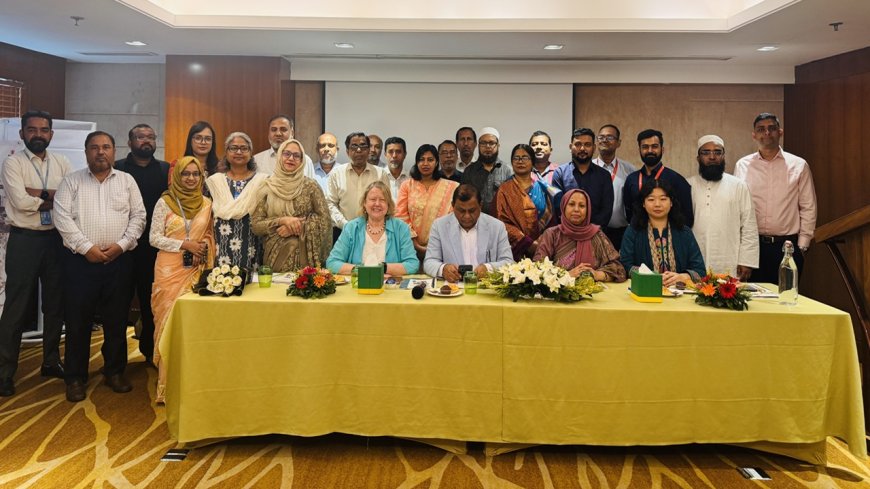
Against this backdrop, a three-day national workshop has begun in Dhaka at the Holiday Inn Dhaka City Centre, jointly organized by the Ministry of Education and the Ministry of Primary and Mass Education, with the cooperation of UNESCO, UNESCO IIEP, Save the Children, and the Global Partnership for Education.
Starting from 10 May, Sunday, the workshop titled “Climate Smart Education Systems Initiative (CSESI)” will continue until 12 May. More than 30 government officials, technical experts, and education planners from national and sub-national levels are participating. The objective is to assess existing capacities in the education sector and further strengthen climate risk analysis capabilities.
At the inauguration of the workshop, Secretary of the Secondary and Higher Education Division of the Ministry of Education, Abdul Khalek, attended as the chief guest. He said that this initiative will play an important role in creating opportunities for evidence-based policy formulation through assessment of the education system’s capacity.
Dr. Susan Vize, UNESCO Representative and Head of Office in Bangladesh, said that the main objective of the workshop is not only to identify risks but also to analyze how effectively existing institutional capacities can address those risks.
As special guest, Additional Secretary (Development) of the Ministry of Education Badrun Nahar highlighted the importance of climate information systems and climate financing in the education sector. Representatives from various institutions including education administration, the Bureau of Statistics, the Meteorological Department, and the University of Dhaka are participating in the workshop.
According to experts, Bangladesh is one of the most climate-vulnerable countries in the world. Recent data indicates that in a single year, nearly 16,000 educational institutions were affected by climate-related disasters. Floods, cyclones, rising temperatures, and salinity intrusion are also affecting student attendance and learning outcomes.
The “Climate Smart Education Systems Initiative” workshop is part of a continuous process that began in 2024. Through this initiative, Bangladesh’s first national-level climate risk analysis for the education sector is being developed, which is expected to play a significant role in future policy, infrastructure, and climate financing planning.
DBTech/ARRT/MUM/OR









