
































Robotic Revolution in Surgery: BMU Seminar Stresses Readiness, Resources, and Rigorous Training



Robotic surgery has the potential to make a tremendous contribution to advanced healthcare in today’s age of technology. However, to ensure services through robotics, it is essential to provide proper training to doctors and associated personnel. Only then will patients receive the expected benefits from robotic systems.
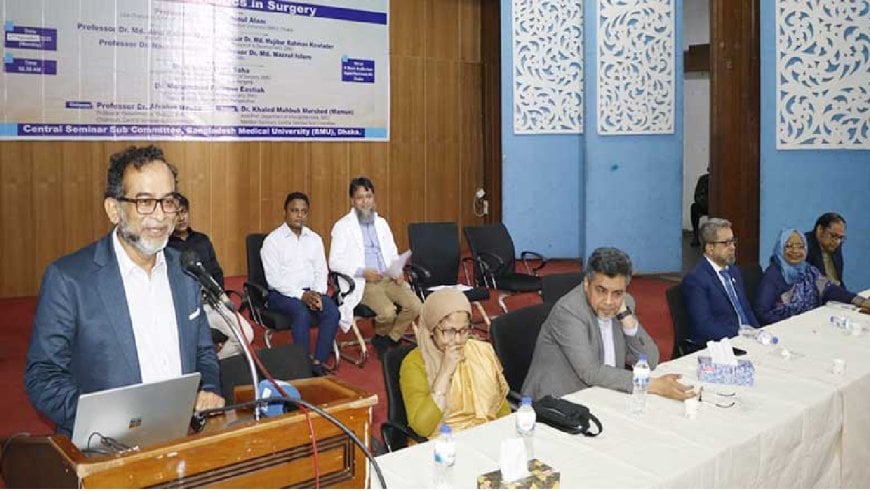
These observations were highlighted at a University Central Seminar titled “The Role of Robotics in Surgery”, held on Monday, 17 November, at the A-Block auditorium of Bangladesh Medical University (BMU).
The Central Seminar Sub-Committee organized the event to discuss how this cutting-edge technology can elevate the nation’s healthcare services to international standards, its advantages and disadvantages, and its feasibility in Bangladesh.
In his speech as the chief guest, BMU Vice Chancellor (VC) Professor Dr. Md. Shahinul Alam said,
“Introducing robotic surgery in Bangladesh is a dream. With the collective efforts of teachers, doctors, and students, this dream can be realized. However, before implementing it, we must clearly understand and evaluate our current state, especially in surgical services, and move forward with informed consideration. I hope today’s academic leaders of the medical profession will provide the right guidance to make robotic surgery a reality at BMU.”
Special guest speakers included Pro-Vice Chancellor (Administration) Professor Dr. Md. Abul Kalam Azad, Pro-Vice Chancellor (Research & Development) Professor Dr. Md. Mujibur Rahman Howlader, Treasurer Professor Dr. Nahrin Akhter, and Dean of the Faculty of Surgery Professor Dr. Md. Ibrahim Siddique.
Although robotic surgery is new in Bangladesh, experts noted that it is not new globally. They emphasized that to keep pace with the world and advance Bangladesh’s healthcare services, introducing robotic surgery has become a timely necessity.
They added that in this era of rapid technological progress, avoiding robotic surgery is no longer an option. It can significantly improve advanced healthcare services. However, ensuring proper training is the most essential requirement. Regardless of how advanced the robotic assistance may be, doctors and relevant personnel must acquire the necessary skills and knowledge. Only then will patients receive the desired outcomes.
At the seminar, Associate Professor Dr. Mohammad Faruk Ishtiaq from the Department of General Surgery presented a paper titled “Robotic Surgery: Our Perspective”, and Assistant Professor Dr. Krishna Pada Saha from the Department of Colorectal Surgery presented “The Role of Robotics in Surgery”.
They explained the advantages of robotic surgery, including:
– Completing operations through small incisions
– Reduced complications
– Faster patient recovery
– Less bleeding
– Minimal postoperative pain
Benefits for surgeons include:
– Ability to view 3D images during complex procedures
– Easier and safer movements compared to human hands
– Complete elimination of hand tremors
– Ability to operate for long hours while seated comfortably
– Experienced surgeons can guide or even perform surgeries remotely
– Low risk of machinery failure
– Helpful for surgeons with orthopedic issues, pregnant surgeons, and surgeries involving obese patients
DBTech/MV/IK/OR