





































Plastic-to-Painkillers: Pioneering Progress in Biotechnology
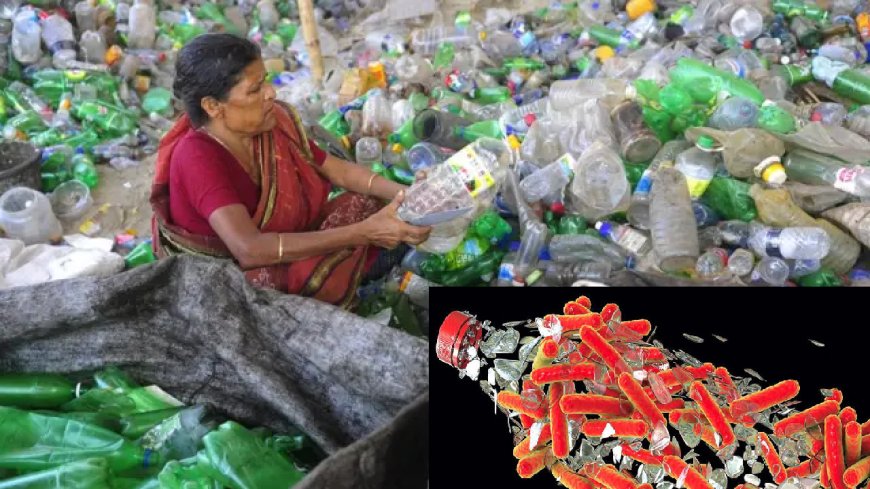



Scientists have unveiled a groundbreaking method to produce painkillers from plastic waste. They have genetically engineered a common bacterium, Escherichia coli (E. coli), enabling it to consume and digest certain plastic-derived components and transform them into pain-relieving medicines widely used in daily life, according to a BBC report.
This research was led by Professor Stephen Wallace, Chair of Chemical Biotechnology at the University of Edinburgh. Explaining why E. coli was chosen, he said, “E. coli was the first choice for this experiment as it has long served as a trusted workhorse in biotechnology research.”
Professor Wallace previously demonstrated success by using the same bacterium to convert plastic waste into vanilla flavoring and to create perfume from fatbergs collected from sewers.
Commenting on this achievement, Professor Adam Feist of the University of California said, “After working with other microbes, I realized how easy, sustainable, and effective E. coli is. It can grow on a wide range of feedstocks, is simple to store, and can even be revived when needed.”
Cynthia Collins, Senior Director at Ginkgo Bioworks, noted that despite the availability of other microbes for large-scale production, E. coli remains a reliable option. “This bacterium can be used to produce a wide variety of products, and even if toxic by-products emerge during the process, genetic engineering can be applied to make them tolerable,” she added.
Industry experts say this innovation illustrates how biotechnology could transform environmentally harmful plastics into valuable medicines in the future, with E. coli emerging as a central tool in this transformation.
E. coli is naturally found in the human gut. While some strains can cause illness, non-pathogenic and safe variants have long been harnessed in laboratories and industry as “biological factories.” For example, E. coli is widely used to produce insulin, essential for diabetes patients, along with fuels, solvents, and various chemicals.
The bacterium was first identified in 1885 by German pediatrician Theodor Escherich. Research revealed its rapid growth, ease of cultivation, and genetic malleability. In the 1940s, E. coli became the model organism through which scientists discovered “genetic recombination,” revolutionizing biology. In the 1970s, it was the first organism genetically modified, leading in 1978 to the creation of artificial human insulin. By 1997, E. coli was among the first organisms to have its complete genome sequenced.









