






































Content Control Conundrum: BTRC Chairman Flags Gaps in Local Moderation Tech
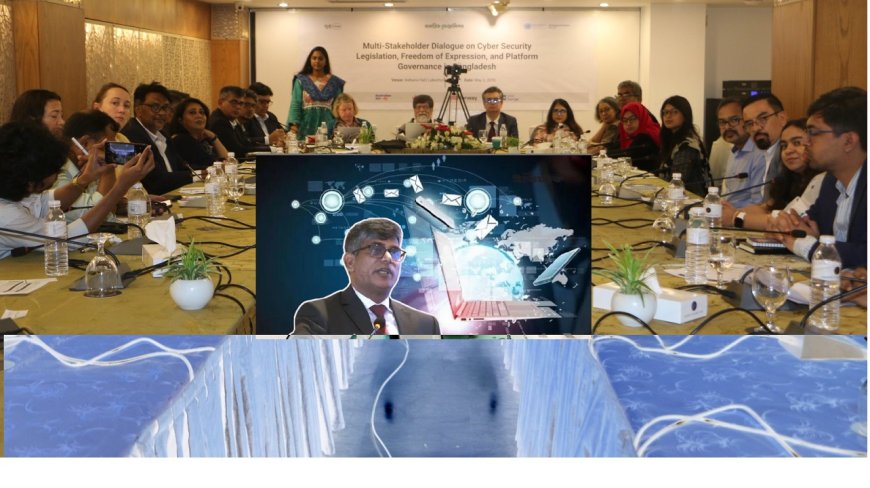



“While pornographic or gambling sites can be blocked from the country’s cyberspace, local service providers are unable to remove unethical content. They lack the technological capability to detect misogyny, hate speech, fraud, or scam-related content,” said Emdad Ul Bari.
In this context, he stressed the need for major platforms such as Facebook, YouTube, and X to have local legal representatives in Bangladesh. He also proposed reducing legal loopholes, ensuring algorithmic transparency, and distinctly labeling AI-generated content.
He made these remarks on Wednesday (May 6) while speaking at a cybersecurity discussion held at Lakeshore Hotel in Gulshan, Dhaka, with participation from various stakeholders.
Highlighting challenges in social media content moderation, the BTRC Chairman said that Bangladesh Telecommunication Regulatory Commission does not directly determine whether content is harmful; rather, it requests platforms to remove content based on recommendations from law enforcement agencies. Over the past year, out of 57,000 content removal requests, 63% were successful, while in the remaining 37% cases, disagreements arose with the platforms.
Pointing to legal and technical limitations, he said platforms provide 100% cooperation in cases involving suicide or child abuse, but the cooperation rate drops to only 56% when it comes to misinformation or hate speech.
The former army officer also noted that the provision in the new Cyber Security Act requiring judicial approval within three days in urgent cases may create technical complications. He attributed this to a lack of coordination and awareness, adding that there are gaps in responsibilities and coordination among different agencies. He also observed a lack of public awareness regarding proper channels for filing complaints.
The multi-stakeholder discussion on cybersecurity and freedom of expression was chaired by Shahidul Alam, Managing Director of Drik. The keynote speaker was Prime Minister’s Adviser on Posts, Telecommunications and Information Technology Rehan Asif Asad.
Other speakers included UNESCO representative Dr. Susan Vize; Political Secretary of the Embassy of Sweden Paulo Castro Neiderstrom; Voice for Reform Coordinator Fahim Mashrur; Project Director of BGD e-Gov CIRT Md. Nazmul Haque Khondkar; consultant Tanimul Bari; Country Head of Tech Global Institute Fawzia Afroz; Director General of PIB Faruk Wasif; Senior Governance Specialist of UNDP Sheila Tasnim Haq; and former member of the Commission on Enforced Disappearances Nabila Idris, among others.
DBTech/IH/MUIM/OR









