






































Experts Emphasize Fact-Checking to Combat Bot-Driven Traffic Threat



Prime Minister’s Adviser on Posts, Telecommunications and Information Technology Rehan Asif Asad has said that a significant portion of Bangladesh’s cyber traffic is dominated by bots or artificial activity. Meanwhile, Bangladesh Telecommunication Regulatory Commission Chairman noted that although the telecom sector shows some progress, Internet Service Providers (ISPs) remain behind in ensuring cybersecurity.
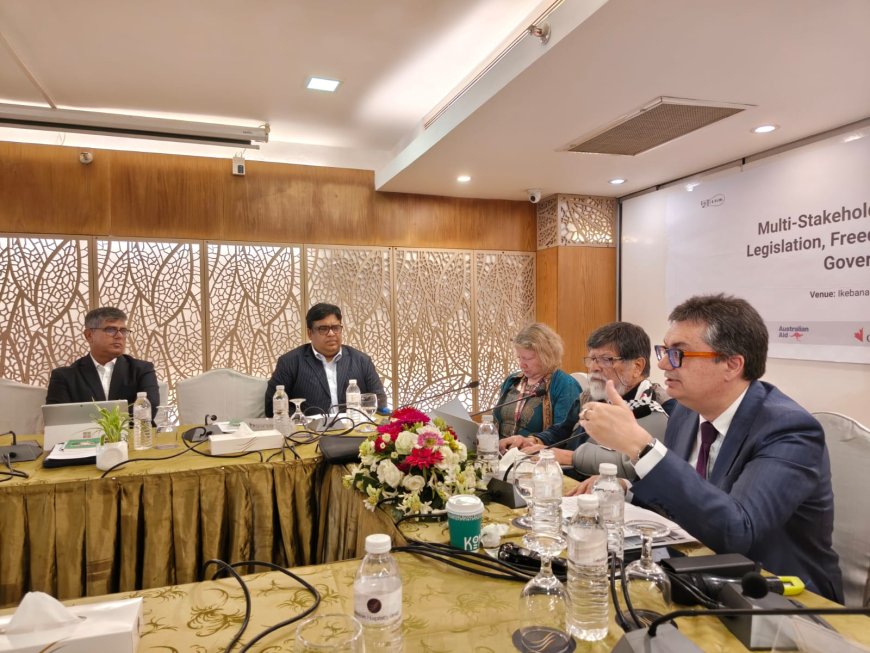
Speakers at a discussion also expressed concern over the rapid spread of fake photo cards and low levels of social awareness. They warned that without strengthening fact-checking processes and citizen awareness, cybersecurity threats could undermine freedom of expression. They called for reforms to the Cyber Security Act along with effective enforcement.
These observations were made on Wednesday (May 6) at a cybersecurity discussion meeting held at Lakeshore Hotel in Gulshan, Dhaka, with participation from various stakeholders.
In this context, the Prime Minister’s adviser placed particular emphasis on fact-checking.
He noted that both public and private sectors in the country still face significant weaknesses in cybersecurity. Since a large portion of personal data is stored in the private sector, securing only government systems will not be sufficient to ensure citizen safety. Despite existing challenges, he said the government will work with all stakeholders to strengthen cybersecurity nationwide.
Highlighting gaps in cybersecurity across both sectors, Rehan Asif Asad warned that failure to reinforce security measures in line with rapid digitalization could lead to major risks.
He further pointed out that many critical institutions still suffer from basic security vulnerabilities. In some cases, simple and risky credentials such as username “admin” and password “password123” are still in use, significantly increasing the risk of cyberattacks.
Referring to legal reforms, he said the government is moving from criminal penalties toward civil liabilities under the Data Protection Act, in line with international standards. He also stressed the importance of understanding coordination and interdependence among relevant laws, including the Cyber Security Act and data protection regulations.
Expressing concern over fake online activities, he said that approximately 60 to 70 percent of total online traffic or engagement in the country is bot-driven or inorganic. This trend, he noted, is making issues such as cyberbullying and online harassment more complex.
Rehan Asif Asad emphasized that ensuring cybersecurity requires more than just legislation. It also demands enhanced technological capacity, skilled human resources, and widespread public awareness.
“To build a Digital Bangladesh, ensuring secure digital infrastructure is essential. This requires coordinated efforts from the government, private sector, and users,” he said.
The discussion was organized by UNESCO, Drik, and the Citizen Coalition, and brought together representatives from various professions. The session was chaired by photographer Shahidul Alam. TIPAP Coordinator Fahim Mashrur, representing civil society, thanked the government for not amending the Cyber Security and Data Protection laws during the interim period.
Among others, speakers included UNESCO representative Dr. Susan Vize; Political Secretary of the Embassy of Sweden Paulo Castro Neiderstrom; Voice for Reform Coordinator Fahim Mashrur; Project Director of BGD e-Gov CIRT Md. Nazmul Haque Khondkar; consultant Tanimul Bari; Country Head of Tech Global Institute Fawzia Afroz; Director General of PIB Faruk Wasif; Senior Governance Specialist of UNDP Sheila Tasnim Haq; and former member of the Commission on Enforced Disappearances Nabila Idris.
DBTech/SH/EK/OR









