






































Digital Drive Deepens:
Free Wi-Fi, Starlink Trials, Fuel Pass Expansion Power Connectivity Push
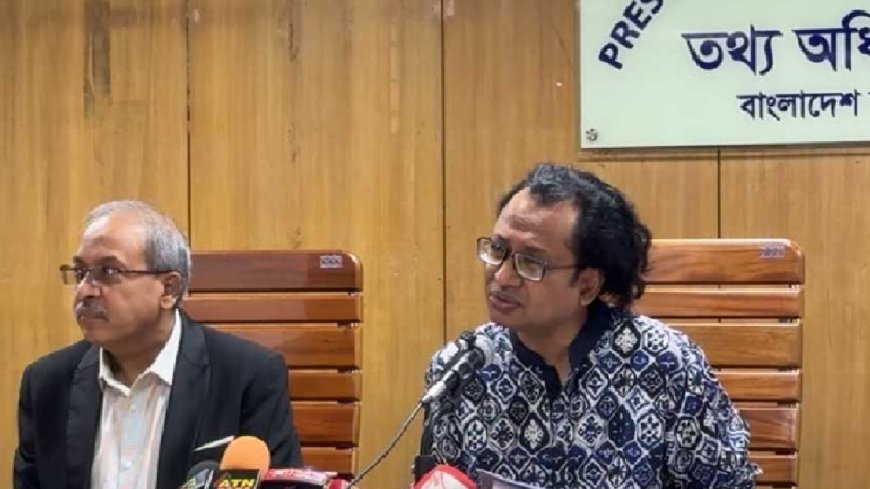



A set of new initiatives has been implemented by the Ministry of Posts, Telecommunications and Information Technology to modernize the country’s digital connectivity and citizen services. To bring the benefits of information technology to the doorstep of the general public, free Wi-Fi services have been launched at airports and railway stations, while pilot installations of Starlink connectivity have been introduced to bring transformative changes to onboard train internet. Although 7,220 Gbps of bandwidth has been imported via submarine cables to enhance the country’s overall internet capacity, 3,120 Gbps of bandwidth still remains unused at Bangladesh Submarine Cables PLC (BSCPLC).
These updates were revealed in the regular weekly briefing of the Ministry of Information on Tuesday (May 5), based on data updated until May 4 regarding the progress and achievements of various government activities.
At the briefing, the Prime Minister’s Adviser on Information and Broadcasting, Jahed Ur Rahman, said that local government elections are expected to begin by the end of this year. He noted that organizing elections at various tiers of local government would take 10 months to one year. “Some preparations are required, which have already been communicated by the relevant ministry,” he added.
Chief Information Officer Abdal Ahmed was also present at the press conference.
Internet and Network Infrastructure
Free Wi-Fi services are currently available at 5 major airports and 4 railway stations across the country. Additionally, high-speed Starlink internet services have been launched on a trial basis on 4 trains operating on the Dhaka–Chattogram–Cox’s Bazar, Dhaka–Sylhet, and Dhaka–Rajshahi routes. Bangladesh Submarine Cables PLC (BSCPLC) continues to play a major role in strengthening national internet capacity, which has now increased to 7,220 Gbps. To expand rural connectivity, 40 new BTS sites have already been launched under Teletalk’s modernization project, and 3,802 new high-speed broadband (GPON) connections have been established at the district level.
According to sources, currently 4,100 Gbps of BSCPLC bandwidth is being utilized. This accounts for only 4 percent of the country’s total demand, estimated at 10 Gbps units. The remaining 60 percent of bandwidth is imported via land routes from neighboring India, as internet service providers prefer this route for cost efficiency.
However, Bangladesh Submarine Cable authorities state that they provide “real internet” connectivity via Singapore, whereas internet imported from India primarily consists of CDN (Content Delivery Network) services. They believe that if data centers of companies such as Google, Facebook, and Akamai are established in Bangladesh, the country will achieve self-sufficiency in bandwidth.
Meanwhile, in line with the election manifesto of the ruling BNP government, plans are underway to establish data center campuses under a “Cloud First” approach to build secure, fast, and scalable digital infrastructure for both public and private services. Bangladesh is also set to be developed as an “edge data center hub” for companies like Google, Facebook, Amazon, and Microsoft.
Fuel Pass System Update
As part of digitizing fuel management, the ‘Fuel Pass’ system has been expanded to include registration for ‘BHA’ (motor cars above 2000cc) and ‘CHA’ (private microbuses) series vehicles. So far, the platform has been opened for a total of 9 vehicle series, including motorcycles, with more than 300,000 users registered. All 111 filling stations in Dhaka Metro are now under the Fuel Pass system.
Mandatory Usage Directive
The government has made the use of the ‘Fuel Pass’ app mandatory for motorcycles at 68 filling stations and for private cars at 18 stations within the Dhaka Metropolitan area. This initiative will soon be extended to all filling stations in Dhaka Metro to ensure transparency. Customers are advised to complete registration in the app before visiting designated stations to ensure smooth service.
Public Transport Reform and EV Bus Initiative
To ensure discipline and safety in Dhaka’s public transport system, the government has accelerated work on integrated smart management and the “Bus Route Rationalization” project. Under this initiative, the numerous existing bus routes in Dhaka will be reorganized into a limited number of major routes to reduce public suffering and modernize transportation.
To reduce fuel dependency and promote environmentally friendly transport, the government is placing special emphasis on introducing electric vehicles (EVs). As part of the initial phase, duties on imported electric school buses have been reduced to zero. This move is expected to increase the number of school buses while significantly reducing fuel consumption and environmental pollution.
Additionally, an Electronic Toll Collection (ETC) system has been introduced on the Dhaka Elevated Expressway to ensure faster and hassle-free travel. With this modern technology, commuters no longer need to wait in long queues at toll gates, as toll payments will be processed automatically. This integration of digital payments and smart connectivity is expected to add a new dimension to easing traffic congestion in Dhaka.
DBTech/SM/EK/OR









