


















































































































Nuclear Milestone: Rooppur Fuel Loading Propels Bangladesh into Atomic Energy Era
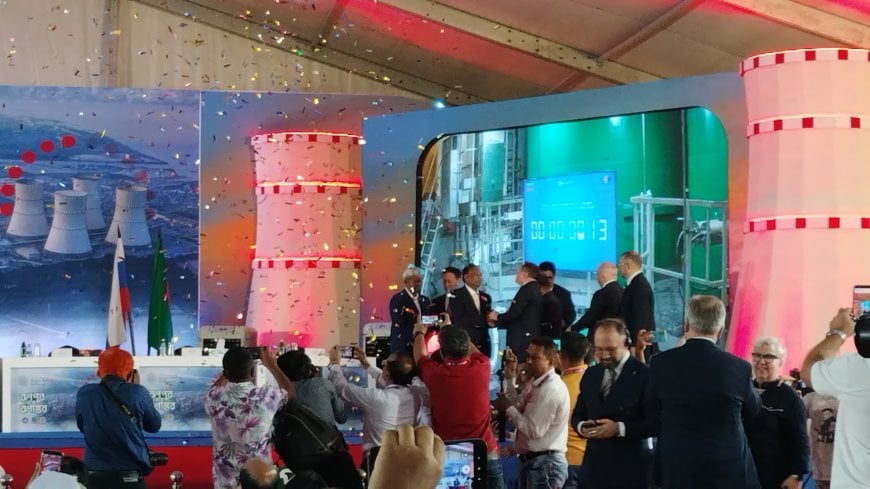



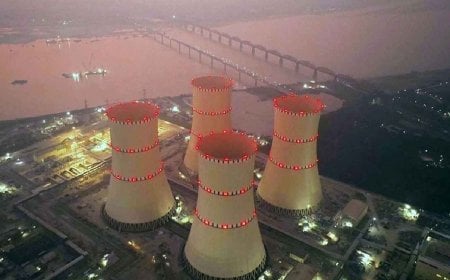
Fulfilling a long-cherished dream of 65 years, Bangladesh has entered the global league of nuclear energy users as the 33rd country, with fuel loading officially commencing at the Rooppur Nuclear Power Plant on the banks of the Padma River by Rosatom.
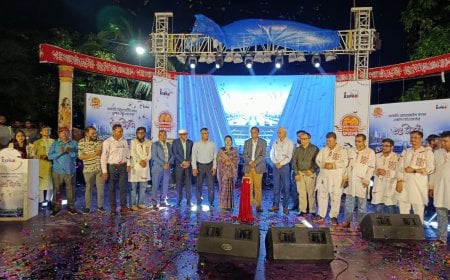
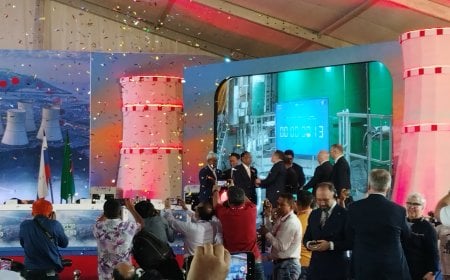
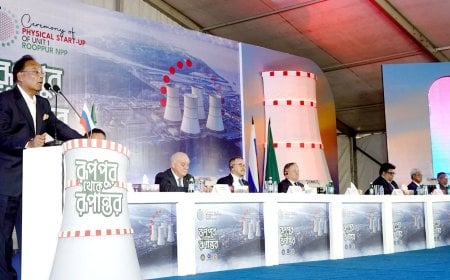
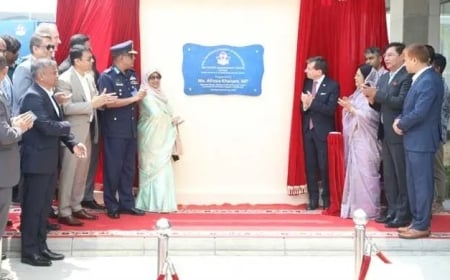
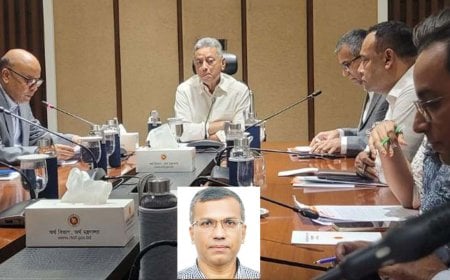
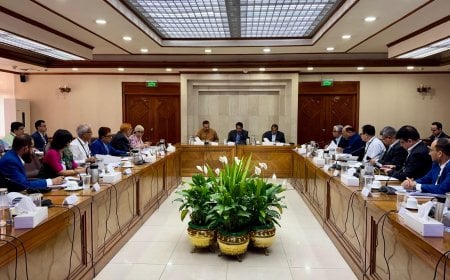
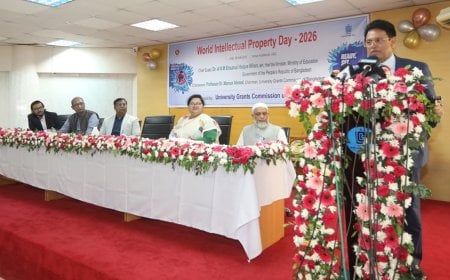
At 3:33 pm on 27 April, Science and Technology Minister Faqir Mahbub Anam inaugurated the fuel loading process at the country’s first nuclear power plant in Ishwardi, Pabna, by activating a special switch. Prime Minister’s Science and Technology Adviser Rehan Asif Asad, Director General of Russia’s State Atomic Energy Corporation Rosatom Alexey Likhachev, Secretary of the Ministry of Science and Technology Anwar Hossain, and Russian Ambassador to Dhaka Alexander Grigoryevich Khozin, among others, were present.
It was announced at the event that, following multiple stages and rigorous testing, the first unit of Rooppur may go into full power generation by February next year.
While speaking as the chairman, Minister Faqir Mahbub Anam expressed hope that fuel loading for the second reactor would take place on 28 April 2027, noting that all activities are being conducted in line with international standards, with safety as Bangladesh’s top priority. He added that the nuclear plant would further strengthen the historic relationship between Dhaka and Moscow.
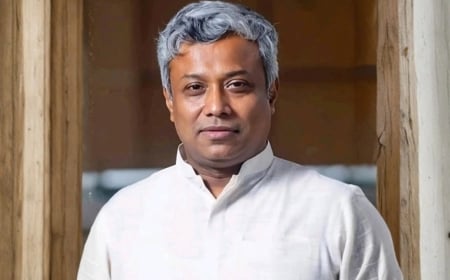
Highlighting the significance of nuclear rod installation as a step toward a knowledge-based, technology-driven self-reliant Bangladesh, Prime Minister’s Adviser Rehan Asif Asad described the day as highly significant, stating that it marks another advancement in the country’s technological progress and opens a new horizon in the energy sector.
In his welcome remarks, Secretary Anwar Hossain said the project represents Bangladesh’s entry into a new era of technology, ensuring international standards and safety. He noted that uranium loading in the first reactor became possible after completing five key stages within a year.
Rosatom Director General Alexey Likhachev assured continued support for Bangladesh, emphasizing that the plant has been built with cutting-edge technology and the highest safety standards. He reiterated that electricity will be generated from a safe nuclear facility and that Rosatom will also assist in future needs, including waste management.
Director General of the International Atomic Energy Agency (IAEA), Rafael Grossi, joined the program virtually.
It is worth noting that the first shipment of nuclear fuel arrived in Dhaka from Russia by air on 28 September 2023, followed by additional consignments. The fuel was transported under strict security to Rooppur in October and stored there. A total of 164 bundles, including one extra, have been delivered, each containing 312 fuel rods.
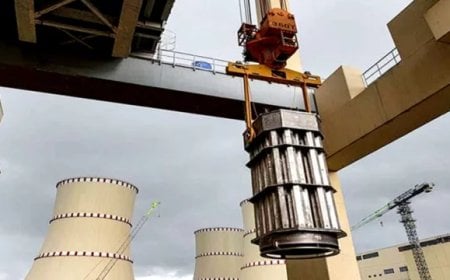
Nuclear fuel is primarily derived from uranium. Uranium oxide is processed into small pellet-like fuel units, typically 8 to 15 millimeters in diameter and 10 to 15 millimeters in length. These pellets are arranged inside approximately four-meter-long metal tubes to form fuel rods, which are then assembled into bundles or fuel assemblies.
For electricity generation, these fuel bundles will be placed at the core of the reactor. The first unit at Rooppur will use 163 bundles simultaneously. Once loaded, the fuel can generate electricity for about 18 months. Spent fuel, which remains radioactive, will be transported to Russia under strict security, with each bundle monitored by the IAEA.
The plant operates on nuclear fission, where splitting uranium nuclei produces immense heat energy. This heat converts water into high-pressure steam, which drives turbines to generate electricity through a controlled chain reaction.
According to reactor design, installing 163 fuel assemblies in the core will take around 30 days. The process requires strict adherence to international safety guidelines and continuous monitoring. Following fuel loading, physical startup will begin, involving nuclear fission reactions and testing over approximately 34 days. Reactor power will then be gradually increased to 3%, 5%, 10%, 20%, and 30% over about 40 days. Electricity supply to the national grid will begin once power reaches 3%, with full capacity expected within approximately 10 months.
The plant has a standard lifespan of 60 years, extendable by an additional 30 years with proper maintenance. A single fuel load can operate the plant for about 18 months, after which one-third of the fuel will need replacement.
Under the agreement, Russia will supply nuclear fuel for three years. After that, Bangladesh will import uranium, with refueling required every two years.
Financially, the Rooppur Nuclear Power Plant is Bangladesh’s largest single project, costing approximately Tk 114,000 crore. Russia is providing 90 percent of the financing as a loan, repayable over 28 years, along with comprehensive technical and technological support.
Although the initial projected cost per unit of electricity was Tk 6, internal sources indicate it may now reach Tk 12.
Despite widespread concerns associated with nuclear energy, it remains one of the most sensitive and strictly regulated forms of power generation globally. The third-generation reactor technology used at Rooppur is designed with advanced automatic safety systems to handle unexpected situations.
Experts emphasize that compliance with International Atomic Energy Agency safety standards is mandatory. With the first unit obtaining the fuel loading commissioning license, the plant is now in its final phase before operation.
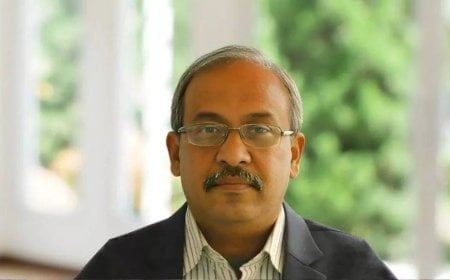
Professor Dr. Pritam Kumar Das of Pabna University of Science and Technology noted that adherence to international protocols is non-negotiable, warning that even minor deviations could halt the project. He stressed that the long-term success of Rooppur depends on a “zero-error” policy. He also highlighted the potential for reusing nuclear waste using fast neutron technology, which could reduce future energy costs.
The concept of nuclear power in Bangladesh dates back to the 1960s. In 1962, Rooppur in Pabna was selected as a suitable site after evaluating 12 locations. A feasibility study by France’s Sofratom in 1977 could not proceed due to political and economic constraints. The Bangladesh Atomic Energy Commission later established the Institute of Nuclear Science and Technology in 1981 and launched a 3 MW research reactor in Savar in 1986.
Nuclear energy was recognized as a potential alternative source in the 1995 National Energy Policy. In 2011, Bangladesh and Russia signed an intergovernmental agreement to build the Rooppur plant, followed by another agreement on 25 December 2015 covering construction, equipment supply, installation, commissioning, trial operation, workforce training, and three years of fuel supply.
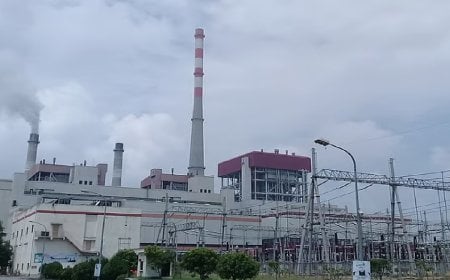
Compared to fossil fuels, nuclear energy is highly efficient. A 1,000 MW coal-based power plant requires around 3 million tons of coal annually, whereas a nuclear plant needs only about 27 tons of fuel for equivalent output. The two units at Rooppur can generate electricity equivalent to that produced from approximately 400 million cubic meters of gas annually.
Experts believe the plant will play a crucial role amid depleting gas reserves and rising energy demand. Unlike most coal-based plants, which rely on costly imports, nuclear energy offers a stable alternative.
Despite global debates, nuclear energy is now considered a clean energy source due to near-zero carbon emissions. The Rooppur plant is expected to reduce carbon dioxide emissions by approximately 20 million tons annually compared to coal-based plants and 8 million tons compared to gas-based plants.
DBTech/IH/EK/OR