A neglected natural resource along the coastal belt—marine red algae—is now opening new avenues of opportunity. A team of researchers from Bangladesh Agricultural University (BAU) has achieved preliminary success in producing low-cost cosmetics and nutritious food products using locally sourced marine red algae.
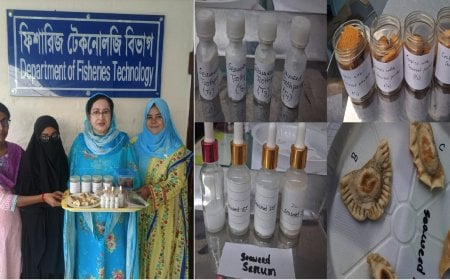
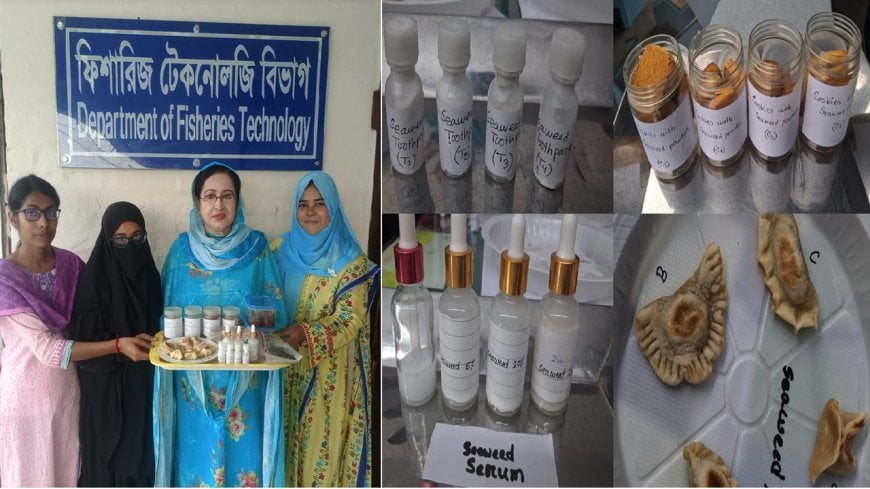
Following extensive research, the team has developed face serum, toothpaste, cookies, and various types of pies derived from marine red algae. These innovative products are being considered promising natural alternatives to synthetic items currently available in the market.
Researchers stated that the coastal regions of Bangladesh are rich in red algae of the Gracilaria species. This deep-sea plant exhibits a dark red color due to the pigment ‘phycoerythrin.’ It contains high levels of antioxidants, natural polysaccharides, protein, dietary fiber, and essential minerals.
The research team is led by Professor Dr. Fatema Haque Shikha of the Department of Fisheries Technology at BAU, with postgraduate students from the same department also contributing to the project.
Dr. Fatema Haque Shikha noted that utilizing this readily available marine algae for human consumption and skincare could provide health benefits while ensuring the proper use of domestic natural resources.
According to her, the algae-based face serum may help enhance skin brightness, control acne, and support wound healing. Similarly, toothpaste formulated with algae extract could help prevent tooth decay, reduce gum infections, and improve overall oral health.
Beyond cosmetics, the researchers have also experimented with algae as a food ingredient. Their developed cookies and pies contain significant amounts of protein, dietary fiber, and minerals. These components are said to aid digestion, boost immunity, and support bone and dental health.
As part of the research, specific scientific methods were followed to extract and process the algae. The quality and effectiveness of the products were initially evaluated using 5, 10, and 15 percent algae extract in varying proportions. Encouraging results suggest the potential for future commercial production.
The researchers also noted that since algae is readily available and can be locally sourced, production costs can be kept relatively low. This would make it possible to market the products within the purchasing capacity of general consumers, offering a more affordable and safer alternative to existing cosmetic and health products.
Globally, the market for algae-based products is expanding rapidly. Red algae is already being widely used as a key raw material in the food, pharmaceutical, and cosmetics industries. In this context, stakeholders believe that implementing algae-based initiatives in Bangladesh could generate new employment opportunities in coastal areas, foster small-scale entrepreneurship, and create prospects for foreign currency earnings.
However, the researchers emphasized that moving toward commercial production will require strict quality control, standardized processing, and effective marketing strategies. Government support and investment could play a crucial role in this regard. They expressed hope that with proper planning and patronage, red algae could emerge as a new economic sector for Bangladesh in the future.
It is worth noting that red algae is primarily a deep-sea plant that derives its dark red color from the pigment phycoerythrin. It is currently cultivated commercially in various countries for use in food, modern medicine, and the cosmetics industry.
DBTech/ADM/MUIM/OR