













































































































































JICA-JUGC Joint Push: Data-Driven Design for Science & Tech Education
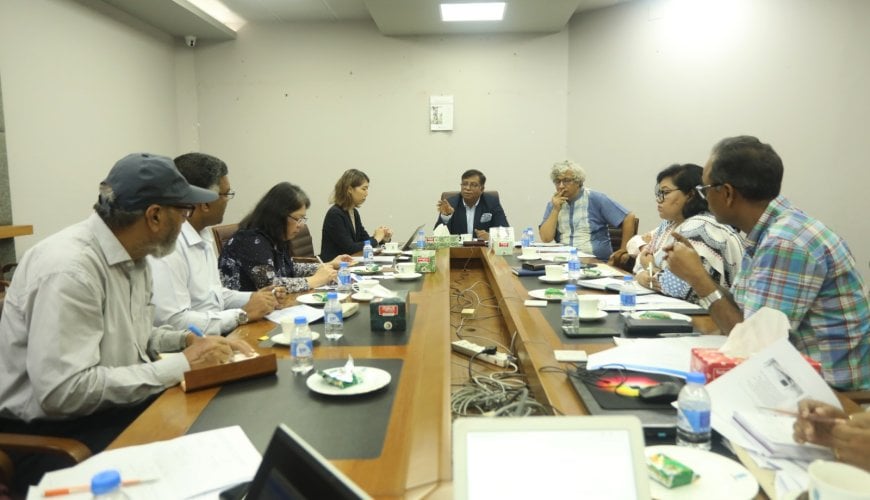



Professor Dr. Mamun Ahmed, Chairman of the University Grants Commission of Bangladesh (UGC), has advised Japan’s development partner agency Japan International Cooperation Agency (JICA) to consider the actual needs of universities in Bangladesh while formulating project proposals aimed at improving the quality of science and technology education in the country.
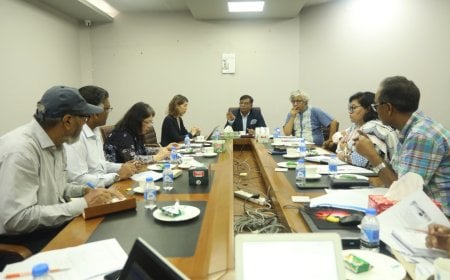
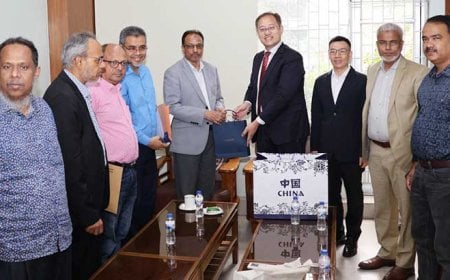
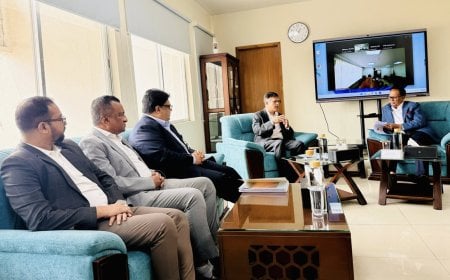
To this end, he also suggested forming a joint committee to provide necessary recommendations. The UGC Chairman made these remarks at a meeting held on Thursday, 23 April, at the UGC office with a JICA delegation.
He said that before preparing project designs, it is essential to assess the real needs and capacities of the country’s universities. For this purpose, he proposed organizing a tripartite meeting involving universities from Japan and Bangladesh, along with the UGC and the Ministry of Education.
A five-member delegation led by JICA Bangladesh Representative Nishi Rizuki participated in the meeting.
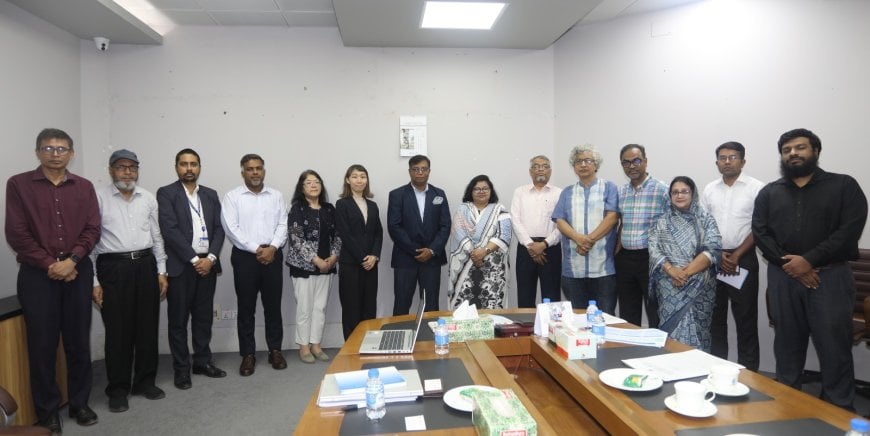
Also present at the meeting were UGC members Professor Dr. Mohammad Tanzimuddin Khan, Professor Dr. Mohammad Anwar Hossain, Professor Dr. Md. Saidur Rahman, Professor Dr. Masuma Habib, and Professor Dr. Mohammad Ayub Islam; Director of the Planning and Development Division Mohammad Maksudur Rahman Bhuiyan; and Director (Acting) of the International Cooperation Division Jesmin Parvin, along with relevant officials.
At the meeting, JICA informed that work is underway to formulate a five-year project aimed at improving science and technology education at the country’s top two universities—University of Dhaka and Bangladesh University of Engineering and Technology (BUET)—which may begin in 2028. As part of the initial preparations for the project, a survey is scheduled to be conducted this year.
JICA further stated that if implemented, the project will expand lab-based educational activities at universities. At the same time, initiatives will be taken to provide opportunities to work in advanced research laboratories in Japan, introduce joint degree programs, offer internships in Japan for undergraduate students, provide PhD scholarships for teachers and students, and strengthen industry-academia collaboration.
The project will also include provisions for student accommodation and employment opportunities. Although the plan is to implement the project at two universities in the country, other universities will also be able to utilize the project’s infrastructure, the JICA delegation noted.
During the meeting, JICA representatives mentioned that Bangladesh is set to graduate from the Least Developed Countries (LDC) category in 2026 and enter the ranks of developing countries. In this context, demand for technology, innovation, and skilled human resources will increase rapidly. They emphasized that strengthening the higher education sector is essential to meet this demand.
The UGC Chairman stated that if JICA’s proposed project is implemented properly, it will bring qualitative changes to the country’s higher education sector. Currently, the UGC oversees around 170 universities in the country and is working to produce quality graduates and strengthen research. He also noted that there are about 50 science and technology universities in the country, and international cooperation can play a significant role in improving the standards of these institutions.
DBTech/MJR/EK/OR