





































The Future of Mental Privacy



The human brain—an extraordinarily complex network of nearly 86 billion neurons that processes billions of bits of information every second—is now facing an unprecedented challenge to its last remaining sanctuary: privacy. Through the convergence of artificial intelligence, nanotechnology, and advanced neuroimaging, so-called mind-reading technology is no longer confined to science fiction. By 2025, it has emerged as a scientific reality, raising profound ethical, legal, and security-related questions for human civilization.
This article provides an in-depth analysis of the historical development, scientific foundations, chip-based brain–computer interfaces (BCIs), viral vector applications, military research, AI integration, and the urgent need for policy and regulatory frameworks surrounding mind-reading technologies. Only scientifically validated findings are presented, with a clear distinction drawn between empirical evidence and speculative claims.
Historical Evolution: A 120-Year Journey
The history of mind-reading technology can be traced back to 1895, when Julius Emner claimed to have invented a machine capable of recording thoughts as “mental photographs.” Inspired by the phonautograph, Emner believed that thoughts, like sound waves, could be captured mechanically. Although his invention failed scientifically, it marked one of the earliest attempts to quantify mental processes.
Modern brain-reading technology began in earnest in 2006, with research by Haynes and Rees, who demonstrated the ability to decode mental states from human brain activity. In 2011, Nishimoto and colleagues achieved a remarkable breakthrough by reconstructing visual experiences from brain activity elicited by natural movies. Their work showed that fMRI data, combined with generative models, could produce recognizable approximations of what a person was seeing.
Scientific Foundations: Decoding Signals from the Brain
At its core, mind-reading technology relies on the measurement and decoding of neural signals. Every thought, intention, and conscious experience corresponds to electrical and chemical activity in the brain. Several techniques are used to capture these signals:
-
Electroencephalography (EEG):
Electrodes placed on the scalp record brainwave activity. EEG offers high temporal resolution but limited spatial resolution due to signal attenuation by the skull. In 2024, Li et al. demonstrated significant advances in visual decoding from EEG embeddings using guided diffusion models. -
Functional Magnetic Resonance Imaging (fMRI):
Measures changes in blood flow associated with neural activity. Research from the Gallant Lab has shown that natural images can be identified from fMRI data. -
Electrocorticography (ECoG):
Involves placing electrodes directly on the brain’s surface, yielding high-resolution signals. Although invasive, it remains one of the most effective methods for BCI applications. -
Near-Infrared Spectroscopy (NIRS):
Used in systems such as Kernel’s Flow, offering greater convenience but lower resolution.
Chip-Based Brain–Computer Interfaces: Neural Threads and the N1 Chip
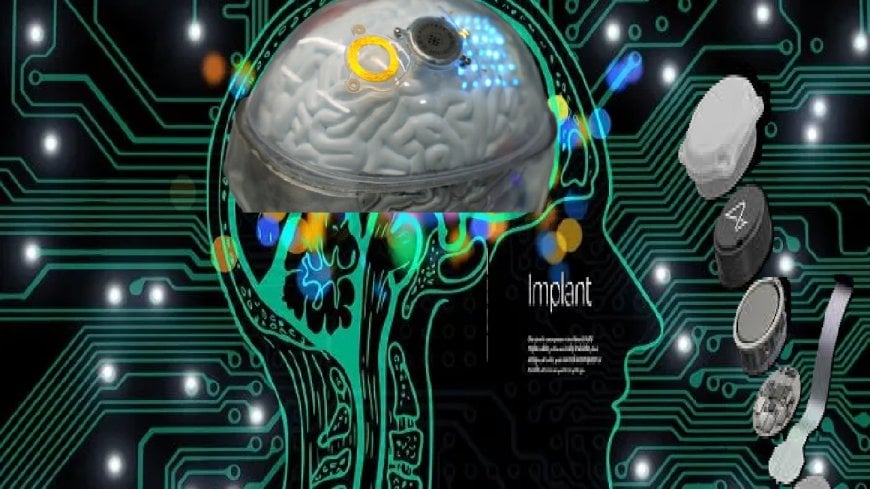
The most advanced form of modern mind-reading technology is the implantable, chip-based BCI. Neuralink’s N1 chip contains over 3,000 electrodes distributed across more than 1,000 ultra-thin threads, implanted directly into brain tissue.
The chip transmits neural signals wirelessly to an external processor, where AI systems decode the data. Following the first human implantation in 2024, three users in 2025 have reportedly been using the system for daily activities such as gaming and web browsing.
Artificial Intelligence and Generative Models: A Decoding Revolution
Modern mind-reading would be inconceivable without AI. In 2022, Nishimoto’s team used latent diffusion models—similar to those underlying text-to-image systems like Stable Diffusion—to reconstruct high-resolution images from brain activity. The process involves:
-
Extracting voxel-wise brain responses from fMRI scans
-
Mapping signals into a latent space using deep neural network encoders
-
Generating images via diffusion models that reflect neural activity
In 2024, Koide-Majima et al. applied deep neural network–based Bayesian estimation to mental imagery reconstruction, achieving over 85% accuracy. Meanwhile, Gilbert and Russo (2024) cautioned that the convergence of AI and neurotechnology risks excessive hype and poses serious challenges to human rights.
A Multidisciplinary Domain: From Neuroscience to Policy
Mind-reading technology is inherently multidisciplinary, involving:
-
Neurobiology: Understanding neuronal function
-
Physics: Electromagnetic signal processing
-
Computer Science: Machine learning and deep learning
-
Biotechnology: Implantable devices
-
Ethics: Neurorights and privacy
-
Law: Protection of cognitive liberty
Effective governance cannot be achieved through a single discipline; coordinated oversight is essential.

Companies and Commercial Development: Key Players
As of 2025, major players in the BCI market include:
-
Neuralink – N1 chip; human trials since 2024
-
Synchron – Stentrode™ endovascular BCI; early FDA approval
-
Blackrock Neurotech – Utah Array; over 30 human implants
-
Paradromics – Connexus®; first human recordings in 2025
-
Precision Neuroscience – Layer 7 Cortical Interface
-
Kernel – Non-invasive fNIRS systems
-
Neurable – Consumer EEG devices
-
Beijing Xinzhida – Leading Chinese BCI firm
Military Applications: DARPA and Synthetic Telepathy
Military uses are among the most concerning. DARPA’s Silent Talk project sought to decode subvocal speech—signals generated when a person thinks words without speaking—using EEG and machine learning. Although early accuracy reached 60–70%, signal degradation posed major limitations.
DARPA’s N3 (Next-Generation Nonsurgical Neurotechnology) program has invested $104 million in non-invasive BCIs capable of transmitting thoughts directly to devices or other brains, moving the concept of synthetic telepathy closer to reality.
Ethical Crisis and Human Civilization: Five Key Risks
-
Violation of Mental Privacy: Brain data breaches could expose thoughts, memories, and intentions.
-
Neurodiscrimination: Use of neural data in employment, insurance, or courts could enable discrimination.
-
Loss of Agency: External influence over brain function threatens free will.
-
Military Misuse: Weaponization of neurotechnology could enable mental warfare.
-
National Security Risks: Although remote brain hacking remains technically implausible without implants, future risks cannot be ignored.
Policy and Safeguards: Eight Recommendations
-
International Neurotechnology Treaty banning brain-hacking weapons
-
Neurorights Legislation ensuring informed consent for brain data use
-
Strict FDA/EMA Guidelines for implantable BCIs
-
Telecommunications Regulation mandating encryption and data sovereignty
-
Military Transparency and civilian oversight of research
-
Public Education on risks and benefits
-
International Prohibitions on brain surveillance technologies
-
Equitable Access to prevent technological inequality
Conclusion: Scientific Responsibility and Humanity’s Future
After 120 years, mind-reading technology has become a scientific reality. Companies such as Neuralink and Synchron are transforming lives through therapeutic applications. Yet the convergence of AI, neurotechnology, and military research has created profound ethical dilemmas.
Humanity stands at a crossroads between liberation and dystopia. Policy decisions made today will determine whether this technology becomes humanity’s greatest emancipatory tool—or its darkest nightmare.
Bangladesh-specific recommendations: Before initiating BCI research, Bangladesh should enact neurorights legislation, establish FDA-equivalent regulatory oversight for medical use, prohibit military applications, and incorporate mental privacy protections into existing digital security laws.
References:
Haynes, J.-D., & Rees, G. (2006). Decoding mental states from brain activity in humans. Nature Reviews Neuroscience, 7(7), 523–534. https://doi.org/10.1038/nrn1931
Nishimoto, S., Vu, A. T., Naselaris, T., Benjamini, Y., Yu, B., & Gallant, J. L. (2011). Reconstructing visual experiences from brain activity evoked by natural movies. Current Biology, 21(19), 1641–1646. https://doi.org/10.1016/j.cub.2011.08.031
Koide-Majima, N., Nishimoto, S., & Majima, K. (2024). Mental image reconstruction from human brain activity: Neural decoding of mental imagery via deep neural network-based Bayesian estimation. Neural Networks, 170, 349–363. https://doi.org/10.1016/j.neunet.2023.11.024
Gilbert, F., & Russo, I. (2024). Mind-reading in AI and neurotechnology: Evaluating claims, hype, and ethical implications for neurorights. AI and Ethics, 4(3), 855–872. https://doi.org/10.1007/s43681-024-00514-6
Wolpe, P. R., Foster, K. R., & Langleben, D. D. (2005). Emerging neurotechnologies for lie-detection: promises and perils. The American Journal of Bioethics, 5(2), 39–49. https://doi.org/10.1080/15265160590923367
The Gaijin Wolfenstein. (2025). Synthetic telepathy: From military dreams to cyberpunk reality. Medium. https://medium.com/@thegaijin.wolfenstein/synthetic-telepathy-from-military-dreams-to-cyberpunk-reality-b851821775b2
Dana Foundation. (2024). fMRI: Still not a mind reader. https://dana.org/article/fmri-still-not-a-mind-reader/
Matsushima, S. K., et al. (2025). Adeno-associated virus expressing a blood-brain barrier. Journal of Clinical Investigation, 135(12), e180724. https://doi.org/10.1172/JCI180724
Naselaris, T., Prenger, R. J., Kay, K. N., Oliver, M., & Gallant, J. L. (2009). Bayesian reconstruction of natural images from human brain activity. Neuron, 63(6), 902–915. https://doi.org/10.1016/j.neuron.2009.09.006
Ross Dawson. (2025). 9 leading brain-computer interface companies and their current and prospective products. https://rossdawson.com/futurist/companies-creating-future/leading-brain-computer-interface-companies-bci/
Spherical Insights. (2025). Top 10 companies leading the brain-computer interface market in 2025. https://www.sphericalinsights.com/blogs/top-10-companies-leading-the-brain-computer-interface-market-in-2025-key-players-statistics-future-trends-2024-2035
SpecialtyCare. (2025). EEG scan technology: Advanced brain imaging for assessment. https://specialtycareus.com/eeg-scan-technology-brain-imaging-assessment/
IntraNerve Neuroscience. (2025). Remote EEG monitoring & cEEG monitoring services. https://www.intranerve.com/services/neurotelemetry-ceeg/
Author: Chief Executive Officer, Seabeach77 Limited
Note: The views expressed are solely those of the author and do not reflect the position of Digital Bangla Media or its affiliates.









