






































Cloud Control and Data Dominion: Experts Stress Digital Sovereignty
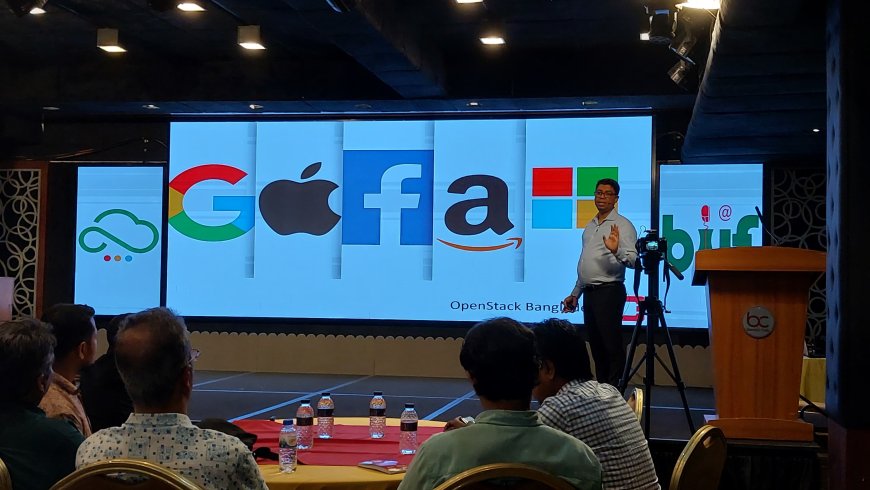



Industry stakeholders have emphasized the importance of achieving data sovereignty through open-source cloud platforms. OpenStack has partnered with the Linux operating system to break the monopoly of single ownership, creating a foundation where developers from 180 countries collaborate on the basis of mutual cooperation. Mubarak Hossain, CEO of Plexus Cloud, noted that Bangladeshi developers must also step forward to establish sovereignty. He remarked, “If there is a cloud, the internet cannot be an obstacle.”
Citing data from tech giants, he argued, “Google is not a tech company; it is a marketing company. Their false profits have created greed, and from there, we have become captive. To free ourselves, we must first break free from mental captivity.”
Looking ahead, Hossain suggested that by 2049, digital devices may be able to emit scents, adding that work is already underway on the brain, the final frontier of the five senses. “Companies like Google are gathering information for brain development. Yet we are handing over our resources to them and becoming digitally captive. The whole world is connected by one patch of internet cable. Today, we live in digital captivity. If Gmail removes the dot, all smartphones will be rendered useless. We must become digitally independent, equal in the eyes of the world, and not remain mere buyers,” he said.
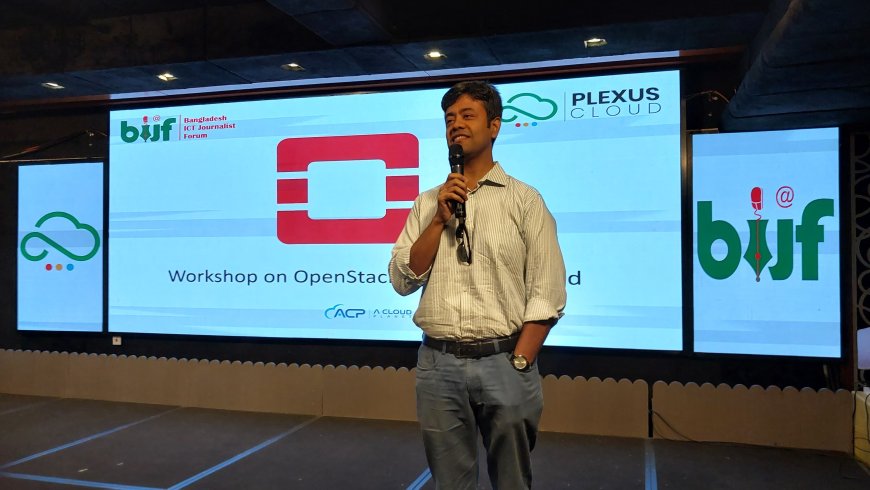
Hossain stressed that after establishing data centers, complete ownership, regional rights, access, and control of data must remain with the local community. He called for the creation of national cloud infrastructure and necessary laws to ensure sovereignty. “A business of fear is now thriving globally. Technology is like a wild horse; the pace of technological change is too fast for laws to keep up. Therefore, we must establish sovereignty by ensuring full rights in technology. We must also be aware of product locking in usage,” he added.
Speaking as a guest of honor, Dr. B. M. Moinul Hossain, Director of the Institute of Information Technology at the University of Dhaka, said, “Data is fuel. If this data is in the hands of Amazon or Facebook, its control will not be in our hands. Therefore, even if it requires compromise, we should obtain services from local companies. The media must learn about the cloud and raise awareness on this issue.”
While delivering his welcome address, BIJF Vice President Bhuian Enam Lenin said, “AI has broken doors and entered every household. We must learn ChatGPT, DeepSeek, and understand the cloud. We must recognize artificial intelligence, or else society will face confusion.”
Former BIJF President Naznin Nahar highlighted the importance of continuous training for journalists.
In his presidential remarks, BIJF President Hitler A. Halim said, “Such workshops help us understand technology, which in turn supports our reporting and feature writing. To enhance the professional skills of BIJF members, future workshops and knowledge-sharing sessions will focus on AI and other timely technologies.”
The workshop was organized by the Bangladesh ICT Journalists Forum (BIJF) on Wednesday, August 27, at Banani Club in Dhaka.









