






































Begum Khaleda Zia Laid the Foundation of Information Technology: Dr Moyeen Khan
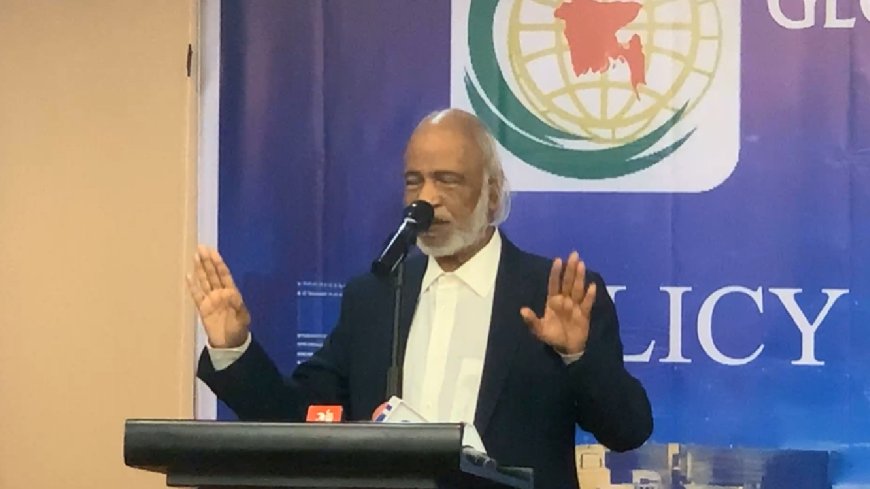



The Global Bangladeshi Alliance (GBA), a research-oriented diaspora platform formed four months ago by US-based technology professionals, entrepreneurs, and policymakers to help build a skilled workforce for a digital trade ecosystem through the US–Bangladesh Caucus, held its first policy dialogue in Bangladesh on Monday evening (January 12).
The policy dialogue took place at Hotel Bangla Blueberry in Gulshan, with BNP Standing Committee Member and former Minister for Science and Technology Dr Moyeen Khan attending as the chief guest.
Joining the event virtually from Washington, DC, GBA Chief Coordinator Dr Golam Rabbani Nayan emphasized leadership development through ethical values. He said a GBA team would soon visit Bangladesh—not for personal gain, but to work collectively toward building the Bangladesh of the future.

The keynote paper was presented by GBA Co-Chair Mizan Chowdhury, who stressed that Bangladesh’s future depends on responsible leadership and structured consensus. He said that through the caucus mission, GBA aims to contribute to policy development alongside initiatives in business, investment, technology, innovation, the new economy, affordable healthcare, and the industrial and cultural sectors. Innovation, good governance, and economic growth, he added, are deeply interconnected.
A dedicated policy discussion on the US–Bangladesh Caucus and its role in economic growth and skills development was held during the dialogue. The panel discussion was moderated by GBA Co-Chair Kawsar Chowdhury, with contributions from Mr Munaf and Australia-based economist Naved Manzur.
In his address, former Minister Dr Moyeen Khan said the foundation of Bangladesh’s ICT sector was laid under the leadership of Begum Khaleda Zia, and failing to advance along that path would be an injustice to earlier contributions. He noted that the people of Bangladesh value freedom above wealth, and the true achievement lies in steering that aspiration in the right direction. Reaffirming BNP’s commitment to democracy, he expressed optimism that an upcoming election would lead to the establishment of a people’s government.
Special guest Abdus Salam Pintu said rebuilding Bangladesh requires the active participation of skilled expatriates. He stressed the need for a patriotic government capable of rejecting corruption and terrorism and standing firm against hegemonic forces.
Engineer Abu Hanip, Chairman of People NTech Group—an organization focused on facilitating mid- and senior-level employment opportunities in the United States—said Bangladesh has 76 universities and that effective skills development could decisively address the country’s unemployment challenge.
DBTech/FBP/OR









