





































2025: The Dawn of a Post-AI World
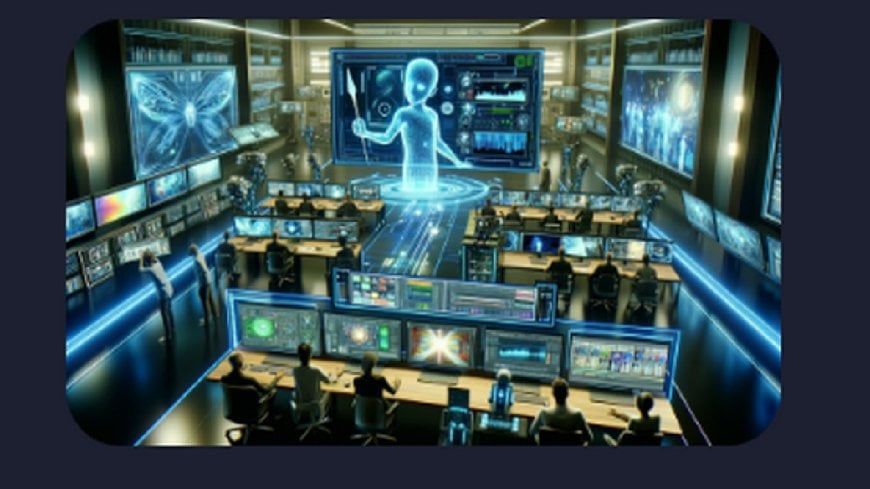



The year 2025 marked the beginning of what many experts describe as the “post-AI” era, a time when artificial intelligence became deeply embedded in every layer of human life. AI was no longer merely a tool; it took on decision-making roles, wrote code, assisted in disease diagnosis, and fundamentally reshaped creative industries through generative technologies. For large language models (LLMs), 2025 stood out as a year of peak maturity.
Tech giants including Google, OpenAI and Microsoft placed AI at the very core of their products. OpenAI, Google and Meta unveiled advanced models capable not only of conversation but also of complex human-like reasoning and argument analysis. Across the globe, white-collar professions experienced widespread AI integration—from software development to legal advisory services, AI emerged as a primary professional assistant.
Alongside rapid adoption, regulatory frameworks took shape. The European Union enforced the AI Act, while the United States introduced comprehensive policy guidelines. At the same time, semiconductors and chips became instruments of geopolitics. US-China tensions intensified over chip dominance, while countries such as India, Vietnam and Malaysia significantly increased investments in chip manufacturing during 2025.
Telecom and Satellite Advancements
In 2025, the International Telecommunication Union (ITU) and other global bodies began finalising standards for 6G technology. In research environments, 6G speeds exceeded one terabit per second (1,000 Gbps), laying the foundation for holographic communication—enabling real-time, three-dimensional human interaction.
Telecom operators increasingly adopted AI as the driving force behind network management. AI-powered systems could predict traffic congestion or technical failures before they occurred and resolve issues autonomously through self-healing networks. This reduced operational costs while significantly improving service quality.
Low Earth Orbit (LEO) satellite internet expanded rapidly into remote regions. Starlink, OneWeb and Amazon Kuiper extended their coverage throughout the year. Beyond conventional 5G, telecom giants began commercial deployment of 5G-Advanced, offering speeds at least ten times faster than standard 5G. This advancement elevated real-time remote surgery and industrial automation to new levels. According to reports by Huawei and Ericsson, initial 5.5G rollouts were completed in more than 50 countries worldwide.
Meanwhile, Open RAN technology gained strong momentum, breaking the dominance of single-vendor telecom equipment markets. By allowing interoperable hardware and software from different suppliers, Open RAN significantly reduced the cost of building telecom infrastructure.
The Satellite-to-Phone Revolution
The year 2025 also became the year of tower-free connectivity. SpaceX, in collaboration with T-Mobile, launched its Starlink Direct-to-Cell service globally. This technology allows ordinary smartphones to send messages and make calls directly via satellite, without any special hardware. As a result, traditional “dead zones” with no network coverage began to disappear permanently.
Science and Space Exploration
Key milestones were achieved in preparations to return humans to the Moon. Under NASA’s Artemis programme, work began on infrastructure to support long-term human habitation in lunar orbit. Alongside NASA, private companies started leasing orbital space around the Moon. As alternatives to the International Space Station (ISS), Blue Origin and SpaceX launched modules for their own commercial space stations.
In parallel, scientists succeeded in generating sustained energy from fusion reactors for extended periods—an achievement considered a cornerstone for the clean energy revolution of the coming decade.
Engineering and Emerging Technologies
South Korea and Japan launched experimental 6G networks, reaching speeds of up to one terabit per second. Robots such as Tesla’s Optimus and those developed by Boston Dynamics began working alongside humans in factories. Globally, the use of robots in hazardous tasks increased by nearly 40 percent.
Health technology entered the mainstream in 2025, driven by rapid technological convergence.
Quantum Computing Goes Commercial
For years confined to laboratories, quantum computing entered commercial use in 2025. Quantum processors developed by IBM and Google began operating in data centres, dramatically accelerating the solution of complex chemical problems and the discovery of new drugs.
Healthcare and Genomics
Medical science and technology advanced hand in hand. Several European countries granted commercial approval for laboratory-grown human skin and small tissue structures using 3D bioprinting. The successful application of CRISPR technology in treating genetic blindness and blood disorders increased significantly. BioNTech and Moderna’s cancer vaccines reached the final stages of clinical trials, with market availability expected in 2026.
In another landmark achievement, a 3D-bioprinted artificial heart functioned successfully in animal trials—marking a major breakthrough in the history of organ transplantation.
Automobiles: Towards a Driverless World
In 2025, Tesla, Waymo and several Chinese companies launched Level-4 autonomous vehicles for large-scale public use. In many smart cities, driverless taxis—or robotaxis—became a common sight. Advances in solid-state batteries pushed electric vehicle ranges beyond 1,000 kilometres on a single charge.
A New Era of Cyber Warfare
As technology advanced, so did threats. AI-driven cyberattacks became more sophisticated, enabling hackers to attempt thousands of password breaches within seconds. In response, quantum encryption technologies began to be adopted as mandatory security measures by major global institutions.
A Breakthrough in Energy Science: Nuclear Fusion
For scientists, 2025 was a year of hope. Researchers in Europe and the United States achieved sustained energy production from nuclear fusion—often described as creating a “mini sun” in the laboratory. This breakthrough marked a major step towards a fossil-fuel-free future.
2026 and Beyond: What Lies Ahead
Experts predict 2026 will usher in the era of “invisible computing,” with screens giving way to augmented reality (AR). Major nations are expected to reach a global agreement on ethical AI use, similar to international climate accords. Commercial-grade quantum computers capable of breaking conventional encryption may soon emerge, triggering a new phase of cybersecurity challenges.
Beyond gaming, offices, courts and social interactions are likely to move into immersive 3D metaverse environments. Lab-grown meat and artificial organs are expected to become affordable for the general public, helping address healthcare and food security challenges. Technologies such as Neuralink are set to complete clinical trials not only for paralysed patients but also for broader human use—bringing the concept of controlling computers with thought closer to reality.
DBTech/MUM/CA/OR









