





































Tech-Facilitated Gender Violence Raises Alarm: NGOs Urged for Coordinated Digital Response



In the era of digital transformation, technology-facilitated gender-based violence (TFGBV) has emerged as a growing social and human rights concern. As women, girls, and marginalized communities are particularly vulnerable, stakeholders have emphasized awareness-raising, preventive measures, legal support, and stronger coordination to address the issue effectively.
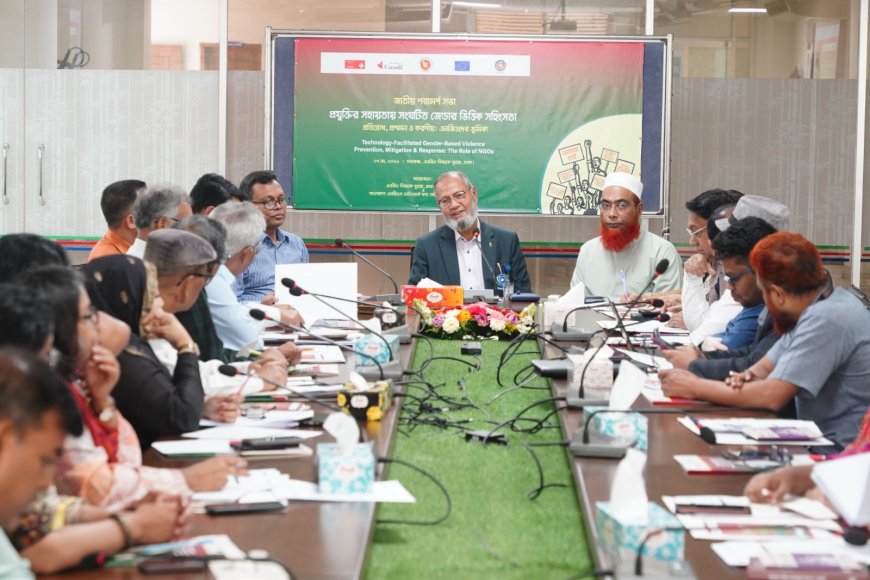
Against this backdrop, a national-level consultation titled “Technology-Facilitated Gender-Based Violence: Prevention, Mitigation and Way Forward and the Role of NGOs” was held in the capital on Wednesday, May 7, jointly organized by the NGO Affairs Bureau, the Prime Minister’s Office, and the Bangladesh NGOs Network for Radio and Communication.
The discussion focused on the nature of tech-enabled gender-based violence, its psychological and social impacts, prevention strategies, and legal complexities in ensuring justice. It also provided guidance on how NGOs can integrate TFGBV prevention into their ongoing and future activities.
The chief guest of the session was Director General of the NGO Affairs Bureau, Dr. Mohammad Zakaria. The event was held under the project “Strengthening Resilience Against Technology Facilitated Gender Based Violence and Promoting Digital Development,” implemented under the Citizenship: Civic Engagement Fund programme. The project is funded by Switzerland, Global Affairs Canada, and the European Union, with technical support from GFA Consulting Group.
The session was moderated by Barrister Md. Khalilur Rahman, who stressed that addressing TFGBV and incorporating it into NGO programming is essential for future interventions.
Panelists included Shashwati Biplob, Md. Harun-or-Rashid, and Zakir Hossain. Representatives from 67 participants across 38 NGOs from different sectors attended the consultation.
Md. Nurul Islam said that it is now time to mainstream technology in the same way gender mainstreaming has been adopted. He noted that including directives related to technology, digital security, and TFGBV in project approvals could significantly advance digital awareness.
Dr. K. M. Mamun Uzzaman emphasized that, alongside legal mechanisms, raising social awareness is critical. He suggested that community radio, regional media, and digital platforms can be used effectively for this purpose.
In his keynote remarks, Dr. Mohammad Zakaria stated that TFGBV is not merely a technological issue; it is deeply linked with human rights, gender justice, social security, mental health, and the rule of law. He stressed the need for a coordinated national action plan and the development of a strong referral mechanism among NGOs, administration, law enforcement agencies, and service providers.
The keynote paper was presented by AHM Bazlur Rahman, who said that TFGBV is not confined to the online space; its impact extends to victims’ offline lives, mental health, and social safety. He called for moving beyond a victim-blaming culture toward a rights-based and empathetic approach.
During the open discussion, NGO representatives highlighted the need to prevent internet and social media addiction among children and youth, raise awareness on online gaming use, strengthen digital forensic capacity, enhance the skills of police and the judiciary, and develop victim-friendly support systems.
Participants also emphasized expanding the reach and promotion of the Police Cyber Support for Women service. They further recommended special programmes to change the mindset of men and boys, alongside initiatives targeting women and girls.
Speakers concluded that with the growing use of technology, digital security, gender justice, and human rights protection must be considered integral parts of development efforts. They stressed that there is no alternative to effective coordination among the government, NGOs, civil society, media, the technology sector, educational institutions, and law enforcement agencies in preventing TFGBV.
DBTech/HP/MUM/OR









