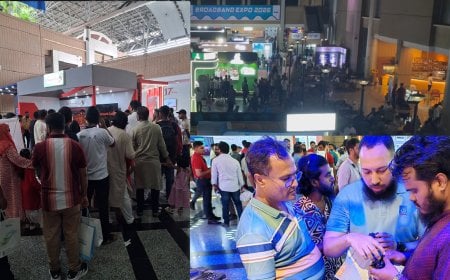
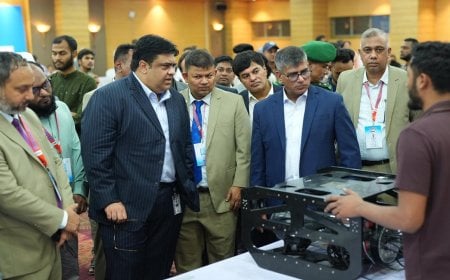
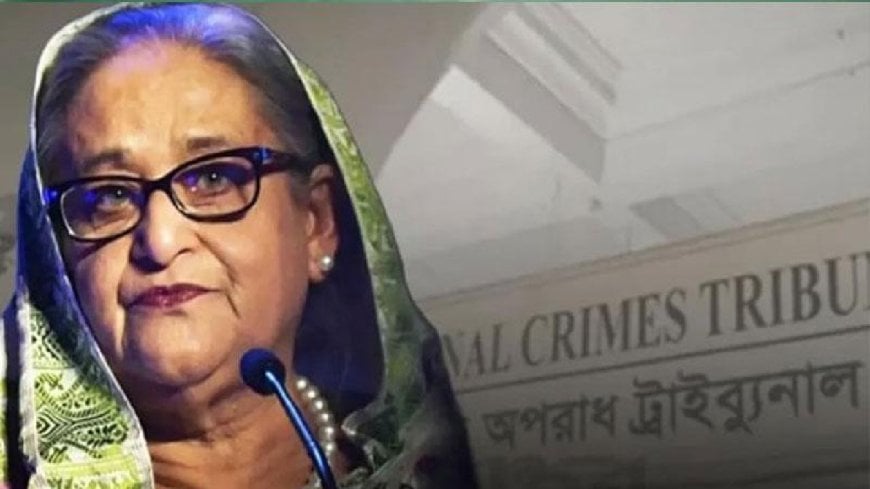
Citizens across various locations have been watching the verdict proceedings of International Crimes Tribunal-1 virtually—either on large screens or on their mobile phones—from the very beginning of the judgment delivery in the case filed over crimes against humanity committed in July–August. The case involves three accused, including the ousted Prime Minister Sheikh Hasina. Private television channels are using BTV’s live feed, but online platforms—especially Facebook and YouTube—have drawn significantly larger audiences than television.
At around 12:40 pm on Monday, 17 November, Justice Md. Mohitul Haque Enam Chowdhury, a member of the three-judge panel, began reading the first section of the 453-page verdict. The tribunal is led by Chairman Justice Md. Golam Mortuza Mojumdar, with Justice Md. Shafiul Alam Mahmud as the third member. Sheikh Hasina and Kamal remain fugitives in the case.
Former IGP Mamun, however, has been in jail for nearly a year following his arrest. Having turned state witness, he testified before the tribunal against the former prime minister and the former home minister. For this reason, the prosecution left the decision regarding his punishment to the tribunal, while seeking the highest penalty for Sheikh Hasina and Kamal.
During the hearing, the prosecution placed strong emphasis on Sheikh Hasina’s alleged telephonic orders regarding the use of drones and lethal weapons. Several video evidences were also presented.
After 9:10 am, police escorted Mamun to the tribunal from prison amid heavy security. Lowering his head, he entered the tribunal’s holding cell—perhaps for the last time.
Representing the state in court were Attorney General Md. Asaduzzaman, Chief Prosecutor Mohammad Tajul Islam, Prosecutor Mizanul Islam, and Prosecutor Gazi Monowar Hussain Tamim.
State-appointed lawyer Md. Amir Hossain appeared on behalf of the two fugitive accused. He said, “I always hope my client (Sheikh Hasina) will be acquitted. The trial at the International Crimes Tribunal has been conducted properly and transparently. I would be the happiest if Sheikh Hasina is acquitted. I seek my client’s acquittal. This is natural—everyone would want the same for their client.”
Testimony and cross-examination of 54 witnesses concluded over 28 working days in the case. The prosecution and state defence presented arguments and counterarguments over nine working days. On 23 October, following the closing arguments presented by Attorney General Md. Asaduzzaman, Chief Prosecutor Mohammad Tajul Islam, and state-appointed lawyer Amir Hossain, the tribunal reserved time to set a date for the verdict.
The prosecution sought the highest punishment for Sheikh Hasina and Kamal. However, as Choudhury Abdullah Al-Mamun turned state witness, the prosecution left his fate to the tribunal. His lawyer, Zayed Bin Amzad, sought his acquittal. Amir Hossain also expressed confidence that both Hasina and Kamal would be acquitted.
The prosecution brought five charges against the three accused: incitement, use of lethal weapons, the killing of Abu Sayeed, killings at Chankharpul, and burning bodies in Ashulia. The formal charge sheet spans 8,747 pages, including 2,018 pages of source material, 4,005 pages of seizures and documentary evidence, and 2,724 pages listing the martyrs. Eighty-four witnesses were listed. On 12 May, the tribunal’s investigation agency submitted its report to the Chief Prosecutor.
Meanwhile, around 11:30 am, Dhaka University Central Students’ Union (DUCSU) arranged a public screening at TSC’s Payers' Chattar by installing an LED screen to broadcast live the first verdict of the trial of former Prime Minister Sheikh Hasina, accused of genocide and crimes against humanity. Many gathered to watch the broadcast live.
At noon, protesters from the July Memorial Council and participants in the July Movement marched with a bulldozer to Dhanmondi 32, demanding that the area be transformed into a public playground. After arriving there with a procession from Dhaka College, Nahid Hasan, convener of the July Memorial Council, said, “We want an open playground at Dhanmondi 32. Participants of the July Movement, wounded fighters, and families of martyrs have gathered here today. Our demand is that the Awami League and their collaborators must no longer have any presence in Bangladesh. This is the place where blueprints for attacks on students and the public were made. That is why we want this house demolished and turned into an open field.”
DBTech/ND/IK/OR