









































































































































Fair Fees and Firm Action: Government Signals Support for Small ISPs




Bangladesh is set to introduce measures to protect small and regional Internet Service Providers (ISPs) while bringing cyber attackers under legal accountability, according to Faiz Ahmad Taiyeb, Special Assistant to the Chief Adviser on Posts, Telecommunications and ICT.
In a public statement issued on Friday, 7 November, Taiyeb announced that the new Telecom Licensing Policy will expand the operational scope of district-level ISPs and reduce their proposed license fees. At the same time, provisions are being considered to take strict action against those who conduct Distributed Denial of Service (DDoS) attacks in order to destabilize smaller operators.
According to Taiyeb, “Under the new telecom licensing policy, small ISPs will be allowed to operate across the entire district, in addition to their existing operating area. We are expanding their operational scope. At the same time, we are planning to slightly increase the license renewal fee at the national ISP level and use that to partially compensate the license fees at the district level. Our intention is to make district-level license fees more reasonable, if necessary slightly reduced, so that small-scale entrepreneurs can sustain their businesses. We consider ISPs as SMEs, and therefore their protection is among our highest priorities.”
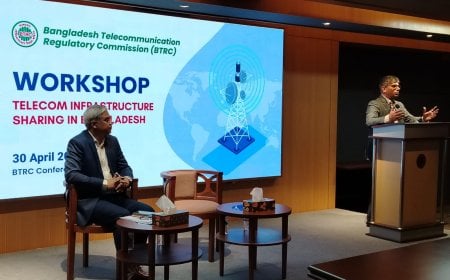
He added that while discussions are ongoing regarding the proposed Fixed Telecom Service Provider (FTSP) pricing model, the Ministry will finalize its stance only after receiving the ANSP guidelines from BTRC and consulting stakeholders.
Commenting on the development, Aminul Hakim, President of the Internet Service Providers Association of Bangladesh (ISPAB), said that Taiyeb’s assurances have given confidence to small and mid-sized operators. “We hope the emerging challenges caused by telecom operators entering the FTSP domain will be resolved. Most investors in this sector are between 22 and 30 years old. This industry has created employment for 450,000 to 500,000 individuals, with nearly 2 million dependents. Considering all these factors, we expect a fair and balanced policy resolution.”
Meanwhile, Taiyeb revealed in a Facebook post that the authorities have identified a “coordinated effort to drive small and regional ISPs out of business.” The Ministry’s monitoring has found that certain large ISPs or corporate groups are allegedly conducting frequent DDoS attacks against smaller providers, forcing many of them to shut down services for hours at a time.
He noted that the attack load often ranges from 500 to 700 Gbps, making it nearly impossible for small ISPs to sustain operations, resulting in customer loss and unfair market domination.
Taiyeb explained that DDoS attacks involve overwhelming a target server with massive volumes of traffic generated through malware-infected computers and devices, ultimately disrupting or shutting down online service access.
He wrote, “Some national ISP companies are misrepresenting the new telecommunications networking and licensing framework to intimidate or acquire small ISPs. We consider such acts to be criminal.”
Reaffirming government policy, Taiyeb stated that the new licensing structure clearly preserves the business scope of local ISPs: “Small ISPs will be able to operate across their entire district. We have expanded their operational area.
Additionally, we are moving forward with a plan to moderately increase the license fees for national ISPs and use that adjustment to make district-level license fees more equitable, including at the upazila level.”
The proposed policy adjustments are expected to create a more balanced, competitive, and secure internet service ecosystem across the country, strengthening local connectivity infrastructure and protecting entrepreneurship in underserved regions.