
















































































































































































Bangladesh Launches Inter-Ministerial Data Interoperability Initiative to Strengthen Routine Immunization




The government of Bangladesh has initiated an inter-ministerial data interoperability program to make the routine immunization system more effective, coordinated, and sustainable. Under this initiative, a unified data exchange platform will be implemented, with the Expanded Program on Immunization (EPI) serving as the primary use case for the pilot.
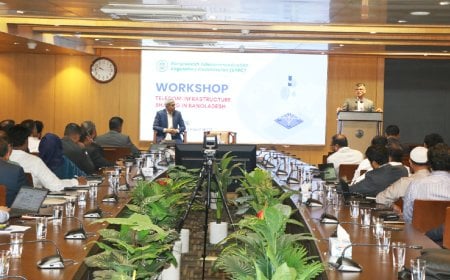
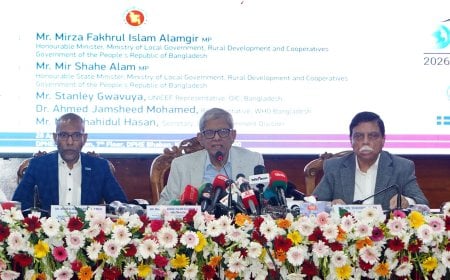
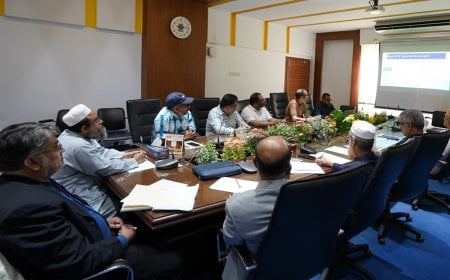
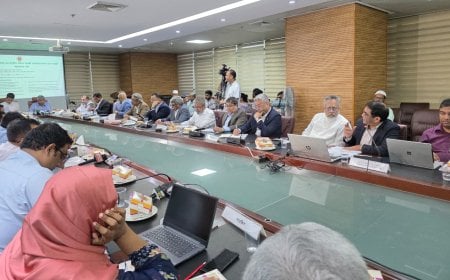
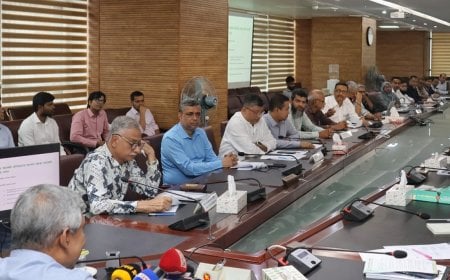
The announcement was made at a high-level policy meeting held on Sunday, December 14 at a Dhaka hotel, jointly organized by the Cabinet Division, Aspire to Innovate (A2i), ICT Division, and UNDP Bangladesh. Shish Haider Chowdhury, Secretary of the ICT Division, and Zaheda Parvin, Secretary of the Reform and Coordination Wing of the Cabinet Division, outlined the plans.
To implement the initiative, a strategic committee comprising representatives from relevant ministries and offices, along with a technical committee of experts, has been formed. Lessons learned and challenges encountered from the EPI system will inform the development of a national-level interoperable system in the future.
Shish Haider Chowdhury said, “Currently, citizen data exists across birth registration, Civil Registration and Vital Statistics (CRVS), EPI, education, and identity card offices, but these systems are not interconnected. As a result, citizens often provide the same information multiple times, causing inefficiencies and affecting service quality. With the integrated data exchange platform, once-collected data can automatically be used across all systems. Information captured at birth will support immunization, school enrollment, ID cards, passports, and other services. This integration will also enable accurate planning, real-time updates, and ensure every eligible child receives all necessary vaccinations efficiently.”
Zaheda Parvin added, “Under the National Data Management Ordinance 2025, the Cabinet Division is responsible for interoperability coordination. By involving the ICT Division, the Cabinet Division will provide full support. Aligning birth registration numbers with the NID system will ensure a unique citizen ID across platforms. With leadership from both secretaries, the initiative will create committees to ensure effective implementation and legal compliance under the National Data Management Ordinance 2025 and the Personal Data Protection Ordinance 2025, setting a new standard for citizen services.”
Officials present included Dr. Ashrafi Ahmed, Director General of the Directorate of Family Planning; Md. Mamunur Rashid Bhuiyan, Additional Secretary, ICT Division (Administration Wing); Md. Abdur Rafiq, Project Director, A2i; Md. Kamrul Hasan and Md. Rashidul Mannaf Kabir, Joint Project Directors, A2i; Md. Mojibur Rahman, Joint Secretary, ICT Division (Digital Governance & Security Wing); Dr. Abu Ahmad Al Mamun, Director (MIS), Directorate General of Health Services; Abdullah Al Fahim, Program Management Lead, A2i; Anwarul Arif Khan, Data & Research Cluster Head; and Maha Abu Emiar, International Project Manager.
DBTech/MJU/OR