


































NEIR Regulates Rogue Handsets
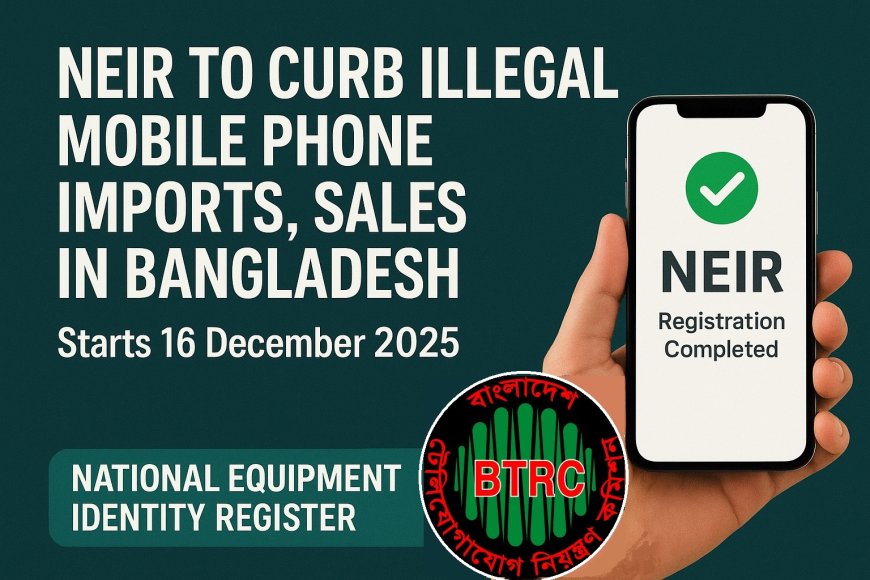



Bangladesh is preparing to introduce the National Equipment Identity Register (NEIR) from December 16 to identify and regulate illegally imported and sold mobile phones. Alongside implementing NEIR, the Bangladesh Telecommunication Regulatory Commission (BTRC) has initiated measures to reduce import duties on mobile phones and the components used in local manufacturing. The commission stated that this integrated initiative aims to curb illegal handset trade, preserve government revenue, and ensure secure network management by bringing all devices in the market under mandatory registration.
According to industry sources, around 63 percent of mobile phones used in Bangladesh are currently produced locally, while the remaining portion is dependent on imports. However, higher VAT and import duties on imported handsets are affecting the competitiveness of local manufacturers. In response, BTRC has formally requested the National Board of Revenue to rationally restructure the tax framework for both imported and locally manufactured phones. The proposal includes considering duty exemptions on components such as PCB/PCBA used in handset production. At present, the import tariff on foreign-manufactured mobile handsets stands at 58.6 percent, which BTRC has recommended reducing.
As per BTRC data, about 37 percent of the population still does not use smartphones, which limits their access to internet-based services despite being within mobile network coverage. Additionally, illegal mobile handsets have long been sold in the domestic market, resulting in an estimated annual revenue loss of around Tk 2,000 crore for the government. Once NEIR is launched, only legally manufactured and imported handsets will be able to operate on the network, while unauthorized devices will be automatically blocked.
NEIR functions as a centralized database system where the IMEI numbers of all legally approved handsets will be registered. Before connecting to a mobile network, a device’s IMEI will be verified against the NEIR database. This process will detect illegally imported, cloned, or counterfeit phones, preventing them from accessing any network. BTRC has stated that this mechanism will substantially reduce incidents of mobile theft, fraud, and financial crimes.
The commission further noted that before NEIR becomes operational, a list is being prepared of unauthorized handsets already present in the market. There may be an option to register their IMEI numbers in the BTRC database, allowing traders to avoid sudden financial losses.
The decision was finalized through cooperation among several government agencies, including the Posts and Telecommunications Division, BTRC, the National Board of Revenue, and the Mobile Phone Industry Owners Association of Bangladesh (MIOB). Approval to implement NEIR was granted by the Office of the Special Assistant on ICT Affairs to the Chief Adviser.
Countries such as India, Pakistan, Indonesia, Malaysia, and Turkey have already implemented NEIR or similar systems, resulting in over a 90 percent reduction in illegal handset usage, increased government revenue, and greater investment in domestic manufacturing. Bangladesh expects to achieve similar outcomes.
BTRC maintains that the introduction of NEIR will significantly enhance legal handset production and sales within the country. In addition to supporting revenue growth, it will strengthen regulatory discipline in the telecommunications sector and ensure safer network services for users. In an official communication signed by BTRC Director General Md. Aminul Haque SUP, the commission noted that a letter requesting necessary measures to implement NEIR was sent to the Posts and Telecommunications Division on November 4.
DBTech/JH/IHaque/OR









