

































Security agencies propose stricter verification for third SIM
Four Crore SIMs Face Shutdown Risk?
- Four crore SIMs could face cancellation under a five-SIM limit
- Third-SIM registration may require biometric and crime-data verification
- Operators say reducing SIMs alone will not curb digital crime
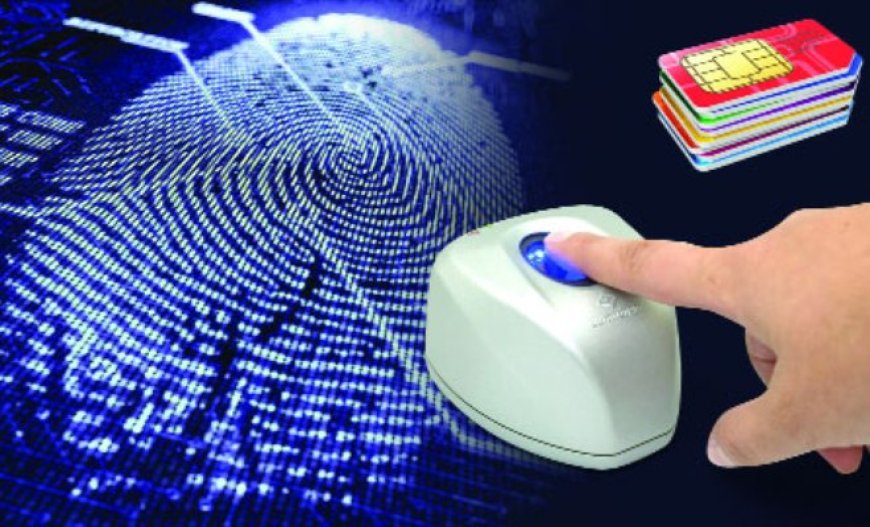



Bangladesh is moving to further restrict the number of active SIM connections that can be registered against a single national identity card (NID) as part of efforts to curb cybercrime, illegal VoIP operations and financial fraud.
A proposal to limit the number of SIMs per NID to five could put nearly four crore active connections at risk of cancellation.
Following recommendations from security agencies, registration of a third new SIM after a customer has already registered two may take up to one week as additional verification could be introduced.
Sources said a proposal has been made to verify customers seeking more than two SIM connections through the Central Biometric Verification Monitoring Platform and the police Crime Data Management System.
The proposed mechanism, however, has not yet been finalised. The authorities are expected to analyse feedback from security agencies and the Bangladesh Telecommunication Regulatory Commission (BTRC) before implementing the system, taking customer convenience into consideration.
Officials said any final decision would have to balance national security with individual rights.
Meanwhile, customers have reported that new SIM registration at the state-owned telecom operator is currently unavailable after contacting its customer-care centres. Private mobile operators, however, continue to register SIMs as usual. Customers can also purchase SIMs from various roadside agents in addition to customer-care outlets.
Why four crore SIMs could be affected
Bangladesh has more than 18 crore mobile connections, while the number of unique NID holders using mobile connections is estimated at around 6.75 crore.
Around 80 percent of customers reportedly use five or fewer SIMs. However, at least 1.2 crore customers have between six and 10 SIMs registered against their NIDs, with an average of six to 10 connections.
If the maximum limit is reduced to five, connections falling within the sixth-to-tenth range would have to be cancelled in phases.
As a result, between 3.5 crore and four crore active connections could face direct cancellation.
How the SIM limit has changed
Bangladesh has changed the maximum number of SIMs allowed against a single NID several times since the introduction of biometric SIM registration.
Initially, customers were allowed to register up to 20 SIMs against a single NID.
In 2017, BTRC reduced the limit to 15 SIMs per NID to prevent the misuse of unregistered and fraudulent SIMs.
In 2025, the limit was reduced further to 10 SIMs in the interest of national security and crime control. As a result, nearly half a crore additional SIMs entered the process of automatic cancellation.
Most recently, based on the views of the Home Ministry’s law-and-order committee and recommendations from security analysts, a policy decision has been developed to reduce the limit further to five SIMs, with implementation planned in phases.
Security agencies’ argument
Regulators and law-enforcement agencies argue that criminals use SIMs registered with other people’s NIDs or multiple SIM connections to conduct financial fraud, including bKash and Nagad-related scams, as well as to spread misinformation.
Such practices make it difficult to identify the actual user behind an offending connection.
According to the security agencies, limiting the number of SIMs registered against an NID could significantly reduce the scope for using fake accounts and identities.
Mobile operators and consumer-rights stakeholders, however, have a different view.
They argue that simply reducing the number of SIMs cannot solve digital crime. In many households, SIMs for internet routers, IoT devices and tablets used by elderly family members or children are registered against one family member’s NID.
Reducing the limit to five at once could therefore create significant inconvenience for ordinary customers.
Operators reject SIM-only explanation
Mobile operators are reluctant to accept the argument that SIM connections are the primary reason for the rise in digital crime.
Robi’s Chief Corporate Affairs Officer Sahed Alam said,“There are many factors and data points involved here. Therefore, the best approach is for them to sit down with us to resolve the issue. We have observed that even after reducing the number of SIM cards per person from fifteen to ten, there was no significant decline in crime. Consequently, even if the limit were reduced to a single SIM, crimes would still occur; SIM cards are not the sole cause of crime. In this era of AI, we need to adopt more strategic approaches to ensure security. First and foremost, the NID database must be secured.”
According to Sahed Alam, crime is linked to multiple data points and technological factors rather than the number of SIMs alone. He argued that securing the relevant databases and strengthening data-driven monitoring should be part of the broader security response.
Risks of automatic cancellation
Under BTRC rules, if a customer does not deregister excess SIMs within the prescribed period, the commission can deactivate additional connections through a Random Selection process.
This creates a risk that a number used for banking, financial transactions or other important personal services could be deactivated unexpectedly.
Customers could then face difficulties replacing long-used personal numbers and updating their details across different digital services.
How customers can check SIMs registered against their NID
Customers can check how many SIMs are currently registered against their NID by dialing *16001# from a mobile phone.
They then need to enter the last four digits of their NID when prompted and submit the information. A return SMS will provide details of how many SIMs are registered under the NID with different operators.
Customers with unnecessary SIMs are advised to visit the relevant operator’s customer-care centre and deregister those connections.
//DBTech/Nafiza Anjum/SME/MIST//